|

Ordinary
Meeting
Notice and Agenda
An Ordinary Meeting of the Bega Valley Shire Council will be held at Council Chambers, Biamanga Room, Bega Valley Commemorative Civic
Centre, Bega on Wednesday, 17 September 2025 commencing at 2:00pm to
consider and resolve on the matters set out in the attached Agenda.
To:
Cr Russell Fitzpatrick, Mayor
Cr Mitchell Nadin, Deputy Mayor
Cr Tony Allen
Cr Simon Daly
Cr Peter Haggar
Cr Clair Mudaliar
Cr Peggy Noble
Cr Helen O’Neil
Cr David Porter
|
Copy:
Chief Executive Officer, Mr
Anthony McMahon
Director, Infrastructure, Mr
Ian Macfarlane
Director, Community,
Environment and Planning, Mrs Emily Harrison
Director, Organisational
Services, Mrs Iliada Bolton
Manager Engagement and
Corporate Strategy, Mrs Kaliegh Smerdon
Executive Officer (Minute
Secretary), Mrs Jackie Grant
|
|
Live Streaming of Council Meetings
Council meetings are recorded and live streamed to the Internet
for public viewing. By entering the Chambers during an open session of
Council, you consent to your attendance and participation being recorded.
The recording will be archived and made available on
Council’s website www.begavalley.nsw.gov.au. All care is taken to
maintain your privacy; however as a visitor of the public gallery, your
presence may be recorded.
Publishing of Agendas And Minutes
The Agendas for Council Meetings and Council Reports for
each meeting will be available to the public on Council’s website as
close as possible to 5.00 pm on the Thursday prior to each Ordinary
Meeting. A hard copy is also made available at the Bega Administration
Building reception desk and on the day of the meeting, in the Council Chambers.
The Minutes of Council Meetings are available on Council's
Website as close as possible to 5.00 pm on the Monday after the Meeting.
1. Please
be aware that the recommendations in the Council Meeting Agenda are
recommendations to the Council for consideration. They are not the
resolutions (decisions) of Council.
2. Background
for reports is provided by staff to the Chief Executive Officer for
presentation to Council.
3. The
Council may adopt these recommendations, amend the recommendations, determine a
completely different course of action, or it may decline to pursue any course
of action.
4. The
decision of the Council becomes the resolution of the Council, and is recorded
in the Minutes of that meeting.
5. The
Minutes of each Council meeting are published in draft format, and are
confirmed by Councillors, with amendments if necessary, at the next
available Council Meeting.
If you require any further information or clarification
regarding a report to Council, please contact Council’s Executive
Assistant who can provide you with the appropriate contact details
Phone (02 6499
2222) or email execassist@begavalley.nsw.gov.au.
Ethical Decision Making and Conflicts of Interest
A guiding checklist for Councillors, officers and community committees
Ethical decision making
·
Is the decision or conduct legal?
·
Is it consistent with Government policy, Council’s
objectives and Code of Conduct?
·
What will the outcome be for you, your colleagues, the Council,
anyone else?
·
Does it raise a conflict of interest?
·
Do you stand to gain personally at public expense?
·
Can the decision be justified in terms of public interest?
·
Would it withstand public scrutiny?
Conflict of interest
A conflict of interest is a clash
between private interest and public duty. There are two types of conflict:
·
Pecuniary
– regulated by the Local Government Act 1993 and Office of
Local Government
·
Non-pecuniary
– regulated by Codes of Conduct and policy. ICAC,
Ombudsman, Office of Local Government (advice only). If declaring a
Non-Pecuniary Conflict of Interest, Councillors can choose to either disclose
and vote, disclose and not vote or leave the Chamber.
The test for conflict of interest
·
Is it likely I could be influenced by personal interest in
carrying out my public duty?
·
Would a fair and reasonable person believe I could be so
influenced?
·
Conflict of interest is closely tied to the layperson’s
definition of ‘corruption’ – using public office for private
gain.
·
Important to consider public perceptions of whether you have a
conflict of interest.
Identifying problems
1st Do
I have private interests affected by a matter I am officially involved in?
2nd Is
my official role one of influence or perceived influence over the matter?
3rd Do
my private interests conflict with my official role?
Local Government Act 1993 and Model Code of Conduct
For more detailed definitions
refer to Sections 442, 448 and 459 or the Local Government Act 1993 and Bega
Valley Shire Council (and Model) Code of Conduct, Part 4 – conflict of
interest.
Agency advice
Whilst seeking advice is generally useful, the
ultimate decision rests with the person concerned.Officers of the
following agencies are available during office hours to discuss the obligations
placed on Councillors, officers and community committee members by various
pieces of legislation, regulation and codes.
|
Contact
|
Phone
|
Email
|
Website
|
|
Bega
Valley Shire Council
|
(02)
6499 2222
|
council@begavalley.nsw.gov.au
|
www.begavalley.nsw.gov.au
|
|
ICAC
|
8281
5999
Toll
Free 1800 463 909
|
icac@icac.nsw.gov.au
|
www.icac.nsw.gov.au
|
|
Office
of Local Government
|
(02)
4428 4100
|
olg@olg.nsw.gov.au
|
http://www.olg.nsw.gov.au/
|
|
NSW
Ombudsman
|
(02)
8286 1000
Toll
Free 1800 451 524
|
nswombo@ombo.nsw.gov.au
|
www.ombo.nsw.gov.au
|
Disclosure of pecuniary interests / non-pecuniary interests
Under the provisions of
Section 451(1) of the Local Government Act 1993 (pecuniary interests)
and Part 4 of the Model Code of Conduct prescribed by the Local Government
(Discipline) Regulation (conflict of interests) it is necessary for you to
disclose the nature of the interest when making a disclosure of a pecuniary
interest or a non-pecuniary conflict of interest at a meeting.
The following form should
be completed and handed to the Chief Executive Officer as soon as practible
once the interest is identified. Declarations are made at Item 3 of the
Agenda: Declarations - Pecuniary, Non-Pecuniary and Political Donation
Disclosures, and prior to each Item being discussed:
Council
meeting held on __________(day) / ___________(month) /____________(year)
|
Item
no & subject
|
|
|
Pecuniary
Interest
|
In my opinion, my
interest is pecuniary and I am therefore required to take the action
specified in section
451(2) of the Local Government Act
1993 and or any other
action required by the Chief
Executive Officer.
|
|
Significant
Non-pecuniary conflict of interest
|
– In my opinion, my
interest is non-pecuniary but significant. I am unable
to remove the source of conflict. I am therefore required to treat
the interest as if it were pecuniary and take the action specified in section 451(2) of the
Local Government Act 1993.
|
|
Non-pecuniary
conflict of interest
|
In my opinion, my interest is non-pecuniary and less
than significant. I therefore make this declaration as I am required to do pursuant to clause
5.11 of Council’s Code of Conduct. However, I intend to continue to be involved with the matter.
|
|
Nature of interest
|
Be specific and include information
such as :
·
The names of any person or organization with which you have a
relationship
·
The nature of your relationship with the person or organization
·
The reason(s) why you consider the situation may (or may be
perceived to) give rise to a conflict between your personal interests and
your public duty as a Councillor.
|
|
If
Pecuniary
|
Leave
chamber
|
|
If
Non-pecuniary (tick
one)
|
Disclose
& vote Disclose
& not vote Leave
chamber
|
|
Reason
for action proposed
|
Clause 5.11 of Council’s Code of Conduct provides
that if you determine that a non-pecuniary conflict of interest is less than
significant and does not require further action, you must provide an
explanation of why you consider that conflict does not require further
action in the circumstances
|
|
Print
Name
|
I disclose the above
interest and
acknowledge that I will
take appropriate action as I have indicated above.
|
|
Signed
|
|
NB: Please
complete a separate form for each Item on the Council Agenda on which you are
declaring an interest.
|
Council
|
17 September 2025
|
Agenda
Statement of Commencement of Live Streaming
Acknowledgement of Traditional Owners of Bega Valley Shire
Statement of Ethical Obligations
1 Apologies and requests for leave of
absence
2 Confirmation Of Minutes
Recommendation
That the Minutes of the Ordinary Meeting held on 20 August
2025 as circulated, be taken as read and confirmed.
3 Declarations
Pecuniary,
Non-Pecuniary and Political Donation Disclosures to be declared and tabled.
Declarations also to be declared prior to discussion on each item.
4 Public Forum – report by Mayor
of deputations heard prior to the meeting
5 Petitions
6 Mayoral Minutes
7 Urgent Business
8 Staff Reports – Community,
Environment and Planning
8.1 Memorandum
of Understanding Bega Valley Shire Council and Clean Energy for Eternity 8
8.2 Adoption
of Draft Affordable Housing Contributions Policy.................................................. 31
8.3 Tura
Marrang Library and Community Centre ground floor (lower level) redevelopment 63
8.4 Development
Application statistics - April to June 2025........................................................ 68
9 Staff Reports – Infrastructure
9.1 Bega
Valley Local Traffic Committee 5 August 2025............................................................... 74
9.2 Merimbula
Airport General Aviation Precinct........................................................................ 155
9.3 Reporting
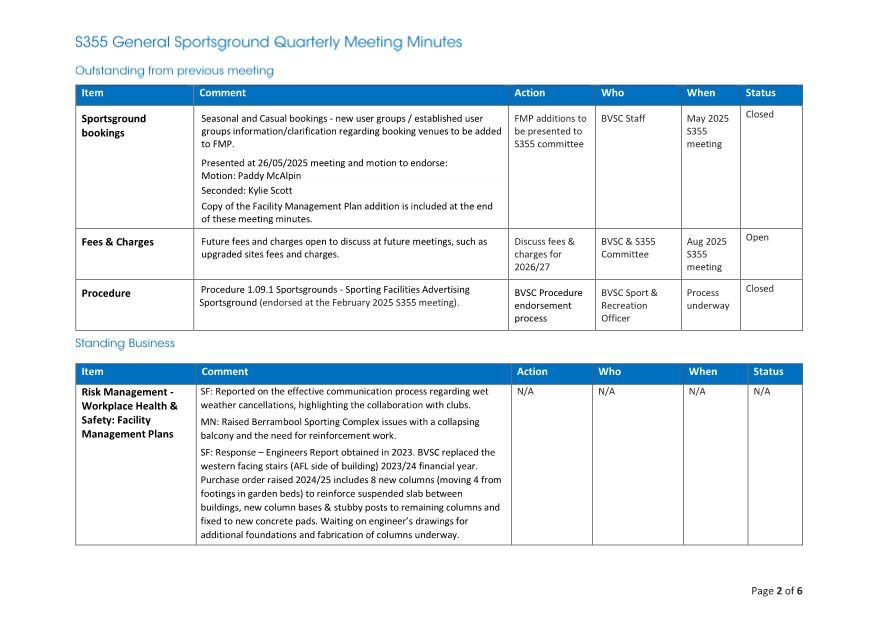
of minutes- Section 355 General Sportsground Advisory Committee meeting 26 May
2025............................................................................................................................................ 172
10 Staff Reports – Organisational Services
11 Staff Reports - Executive Services
11.1 Council
Meeting Dates January 2026 - December 2026....................................................... 182
11.2 Local
Government NSW (LGNSW) Conference 2025 Motions............................................ 185
11.3 Actions
from resolutions of Council - Progress Report......................................................... 233
12 Councillor Reports
13 Rescission/Alteration Motions
14 Notices of Motion
14.1 Lions
Beach Reserve at Pambula............................................................................................... 236
15 Questions with Notice
16 Questions without Notice
16.1 Cr
Nadin - Lots in our Shire........................................................................................................ 238
16.2 Cr
Porter - Robertson Street, Bemboka upgrade................................................................... 240
16.3 Cr
Porter – Are shark fishing signs posted at Tathra Wharf since the
upgrade?.............. 244
17 Confidential Business
Representations by members of the public regarding
closure of part of meeting
Adjournment Into Closed Session, exclusion
of the media and public........................... 245
Statement of Cessation of Live Streaming for the period of the Closed
Session.
Statement of Re-Commencement of Live Streaming
18 Noting of Resolutions from Closed Session
19 Declassification of reports considered previously
in Closed Session
|
Council
|
17 September 2025
|
Staff Reports
– Community, Environment and Planning
17 September 2025
8.1 Memorandum
of Understanding Bega Valley Shire Council and Clean Energy for Eternity............................................................................................................................... 8
8.2 Adoption
of Draft Affordable Housing Contributions Policy.............................. 31
8.3 Tura
Marrang Library and Community Centre ground floor (lower level) redevelopment............................................................................................................................. 63
8.4 Development
Application statistics - April to June 2025.................................... 68
|
Council 17 September 2025
|
Item 8.1
|
8.1. Memorandum of
Understanding Bega Valley Shire Council and Clean Energy for Eternity
This report seeks Council approval
to enter into a new Memorandum of Understanding with Clean Energy for Eternity
Incorporated to support installation of renewable energy infrastructure on
Council assets.
Director Community Environment and Planning
Officer’s
Recommendation
That Council delegates authority to the Chief Executive
Officer to enter into the Memorandum of Understanding with Clean Energy for
Eternity Incorporated at Attachment 1 to support installation of renewable
energy infrastructure on Bega Valley Shire Council assets.
Executive Summary
Clean Energy for Eternity Incorporated (CEFE) has had a
Memorandum of Understanding (MoU) with Council since 2013 to support the
installation of solar panels on Council owned assets, first at the Tathra
Sewage Treatment Plant and subsequently on NSW Rural Fire Service (RFS) sheds
throughout the shire.
The most recent MOU expired on 30 June 2025 and CEFE is
seeking to extend its relationship with Council through a new, 5 year MOU.
The MOU will enable CEFE to continue to expand its
investment in renewable energy systems on Bega Valley Shire Council (BVSC)
owned assets, in agreement with Council officers.
Background
CEFE formed in 2006 and is a registered and not for profit
association. Its objective is to continue working with Bega Valley Shire
communities to achieve the goal of 100% renewable energy by 2030 in the Bega
Valley.
Council resolved at its meeting of 18 December 2013 to enter
an MoU with CEFE to support installation of solar panels at the Tathra sewage
treatment works (most recent MOU provided as Attachment 2 to this report). This
original project, known as the Tathra Community Solar Farm (TCSF), involved
CEFE raising community funds to install solar panels at the Tathra Sewage
Treatment Plant, a BVSC owned and managed asset. The MoU provided for
electricity savings to Council from this capital investment to be paid to CEFE
for investment in other community-based solar installations up to the value of
the original investment of $55,000. A subsequent MoU was entered into in 2020,
agreeing to the continuation of CEFE’s activities into other Council
owned and managed assets, with the addition of solar credits being passed onto
CEFE from Council. This MOU expired on 30 June 2025.
Since the projects inception, Council has contributed $58,228 to CEFE from renewable energy savings calculated
from the Tathra Solar Farm (i.e. cost savings + solar credits) and $2,688 in
solar credits from the RFS sheds. RFS shed solar credits are handed directly
onto the Rural Fire Brigades (for the purchase of equipment) by CEFE, and the
Solar Farm contributions are reinvested back into more renewable energy
projects on Council assets.
Additionally, CEFE undertakes
fundraising events bolstering these contributions and effectively
redistributing benefits to the community. CEFE has completed eight renewable
projects under the most recent agreement. These projects have provided positive
financial, social and environmental outcomes to the community and Council. It
is estimated that total electricity savings accumulated since the inception of
the project is $116, 000.
Table 1 highlights projects completed under the current
arrangement, including system specifications and costs avoided since
installation.
Table
1
|
Site
|
System
|
Date installed
|
Cost avoided $
|
|
Tathra
Solar Farm
|
30 kW
solar PV
|
2015
|
$70,073
|
|
Quaama
RFS Shed
|
3 kW
solar PV, 5 kWh battery
|
2020
|
$3,543
|
|
Kiah
RFS Shed
|
3.3 kW
solar PV, 7 kWh battery
|
2021
|
$10,665
|
|
Rocky
Hall RFS Shed
|
3.7 kW
solar PV, 5 kWh battery
|
2021
|
$3,705
|
|
Brogo
RFS Shed
|
3.7 kW
solar PV, 5 kWh battery
|
2022
|
$4,082
|
|
Towamba
RFS Shed
|
3.7 kW
solar PV,12 kWh battery
|
2023
|
$12,418
|
|
Numbugga
RFS Shed
|
3.7 kW
solar PV, 5 kWh battery
|
2023
|
$12,056
|
|
Tanja
RFS Shed
|
3.7 kW
solar PV, 7 kWh battery
|
2024
|
not
enough data available
|
|
Nethercote
Hall _ & RFS shed
|
3.7 kW solar PV, 7.1kWh battery
|
2024
|
not
enough data available
|
|
|
|
Total
|
$116,542
|
The current MoU expired on 30 June 2025. CEFE has requested continuation of the current arrangement.
Based on the value for money and positive benefits, Council staff support the
agreement to continue as per current arrangements with the addition of extra
reporting requirements, as outlined in Section 6 of the amended MoU (provided
as Attachment 1 to this report).
Options
Options available to Council are
to:
1. Delegate to the Chief
Executive Officer authority to enter into the MoU provided in Attachment 1.
This is the recommended option.
2. Delegate to the
Chief Executive Officer authority to enter into an MoU that varies from that
described in Attachment 1. Council would need to provide proposed alternative
wording and further discussions with CEFE would be required.
3. Not enter into an MOU
with CEFE. This is not recommended as this would mean no further Council or RFS
sheds could benefit from CEFE’s work without significant administrative
work.
Community
and Stakeholder Engagement
Engagement undertaken
Extensive consultation has been undertaken with CEFE and
staff involved in the delivery of the MoU to date. The MoU provided at
Attachment 1 has been agreed with CEFE.
Council has identified actions to support community
investment in renewables in its adopted Climate Resilience Strategy 2020 and
Clean Energy Plan.
Engagement planned
Broad community engagement in relation to the MoU, if
approved by Council, is not proposed.
Consultation with relevant stakeholders will take place for
individual projects, such as RFS members or relevant committees, supported
through the MoU.
Financial
and Resource Considerations
In the short term, there are no direct budget implications
for BVSC in entering into an MoU with CEFE, as the savings to BVSC from
CEFE’s investment in renewable energy systems on BVSC assets are returned
to CEFE for further investment and is cost neutral.
The MoU allows for BVSC to defer the capital cost of
investing directly in renewable energy, where those capital funds are provided
by CEFE.
The typical asset life of solar PV is 25 years and 10-15
years for batteries. Council staff will review the need for replacement on a
case-by-case basis, factoring in availability of new technologies, cost of
replacement and the needs of the facility. If future replacement is deemed
necessary, costs will be covered by Council’s asset managers or through
Council’s renewables budget funded by the Environment levy. The average
cost of these systems is $8,000 (solar battery system). The lifetime
savings and avoided costs often result in a net positive return. With the
projected costs of solar and batteries coming down over time, it is likely
future costs will be less relative to current valuation.
Legal
/Policy
There are no direct legal implications associated with this
proposal, and the proposal is consistent with BVSC’s strategic objectives
to reduce energy costs and greenhouse gas emissions across the shire.
Impacts
on Strategic/Operational/Asset Management Plan/Risk
Strategic
Alignment
Council’s
adopted Clean Energy Plan 2019 has a key focus of: “reducing
BVSC’s inhouse Green House Gas footprint through cost effective
opportunities, such as energy efficiency, renewable energy and energy
storage”. It identifies the installation of behind the meter and
solar photo voltaic arrays as key actions in the medium and long term energy
plans.
The
proposed MoU supports aligns with the Clean Energy Plan 2019 and Climate
Resilience Strategy 2020, as well as the Community Strategic Plan strategic
objective ‘We adapt to and mitigate the effects of climate change’
and the following strategies:
· C.5 Promote
renewable energy adoption
· C.6 Develop
climate-resilient infrastructure and improve energy efficiency in existing
buildings and assets
· C.7
Support community and industry led climate adaptation programs
Environment
and Climate Change
The
proposed MoU supports BVSC’s adopted position to reduce greenhouse gas
emissions across the shire in accordance with the adopted Clean Energy Plan
2019 and Climate Resilience Strategy 2020.
Economic
The proposal does not have a material impact on the economy
of the Bega Valley Shire; however, it does encourage investment in local solar
suppliers. The work of CEFE supports BVSC and community-based organisations to
reduce electricity costs.
Risk
There are safety risks associated with installation and
operation of renewable energy systems on BVSC assets; however, these risks are
part of BVSC’s usual capital and maintenance programs and are well
understood.
A recent restructure of CEFE resulted in a change in
leadership and administrative functions. ‘CEFE Tathra Chapter’ will
oversee all funds and projects in the Bega Valley whilst administrative tasks
and insurances will be managed by CEFE Inc from their Northern Beaches branch.
Staff have reviewed the new structural arrangements and are confident that CEFE
can continue to deliver as agreed in the MoU.
Social
/ Cultural
Community feedback has consistently identified responding to
climate change as an important consideration, with additional health and
wellbeing benefits. The work of CEFE also has indirect benefits for communities
by enabling savings to be channelled into other investments that benefit the
community. Where CEFE has installed solar panels on facilities that service
vulnerable people, service providers may be able to divert savings in
electricity to improved service provision.
Attachments
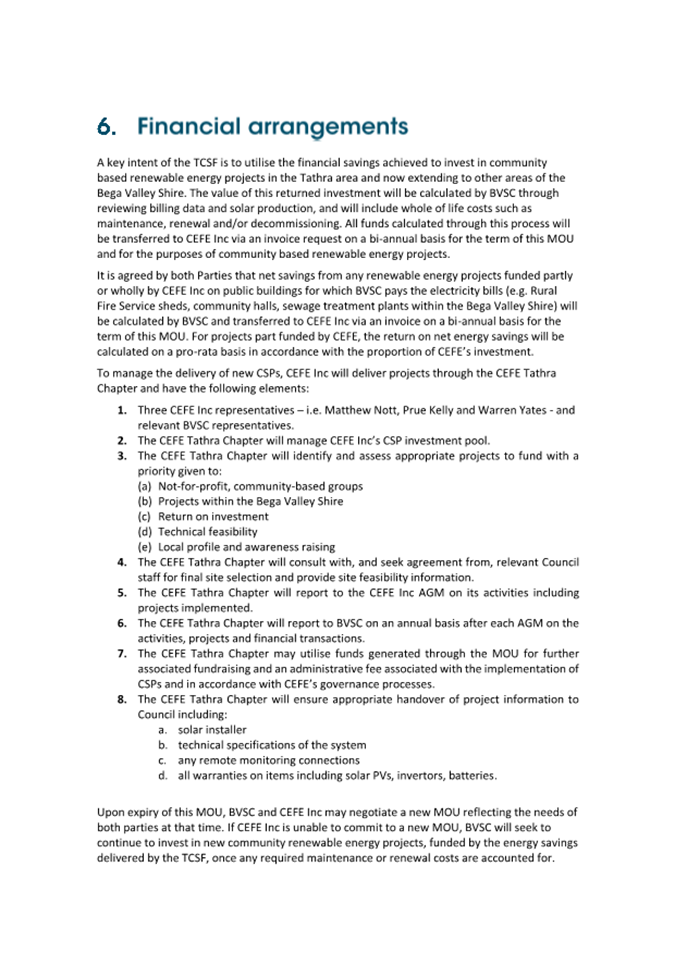
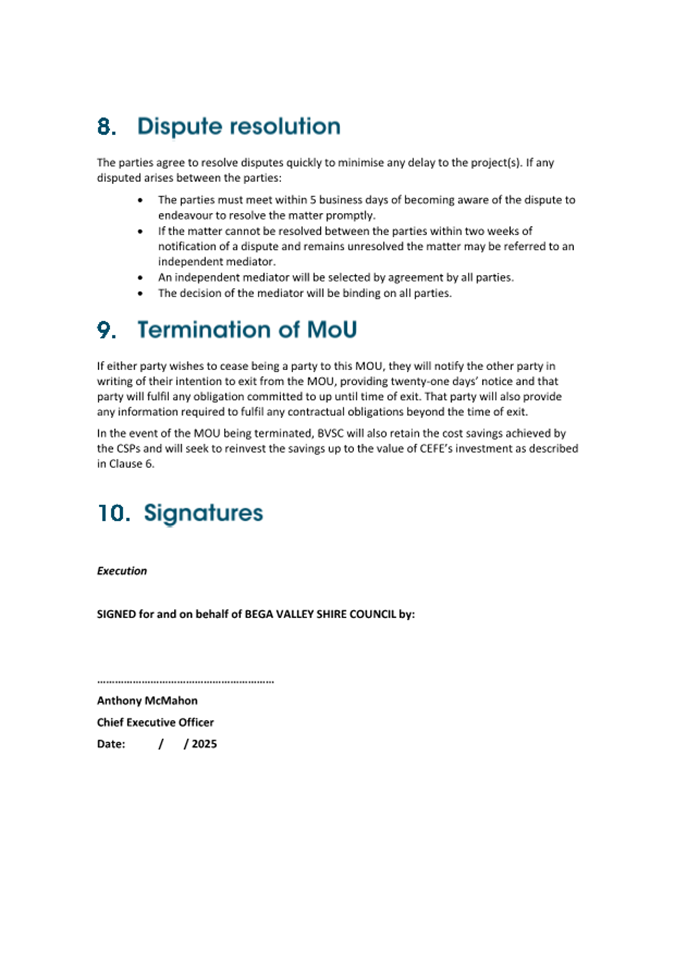
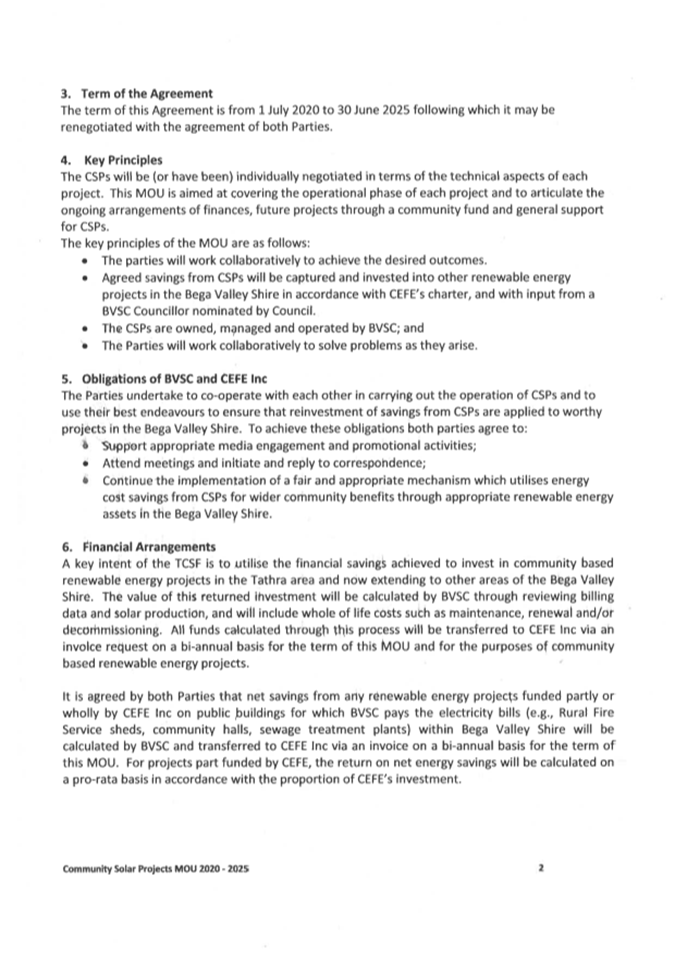
1⇩. Attachment
1 - Proposed Memorandum of Understanding with Clean Energy For Eternity Inc
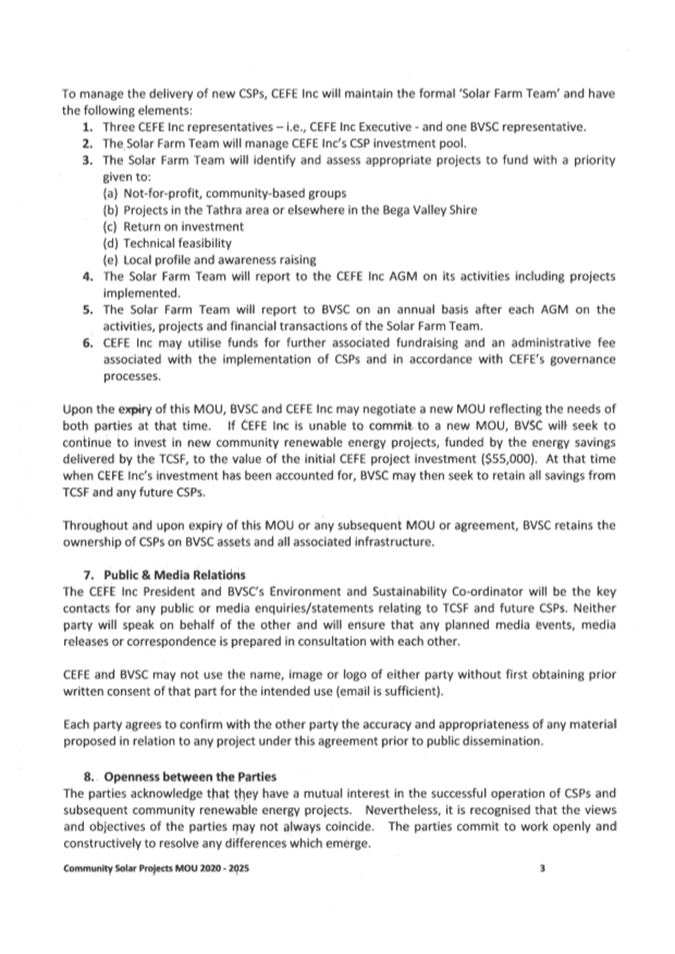
2⇩. Attachemnt
2 - Most recent Memorandum of Understanding with Clean Energy For Eternity Inc
|
Council
|
17 September 2025
|
|
Item 8.1
- Attachment 1
|
Attachment 1 - Proposed Memorandum of Understanding with Clean
Energy For Eternity Inc
|






|
Council
|
17 September 2025
|
|
Item 8.1
- Attachment 2
|
Attachemnt 2 - Most recent Memorandum of Understanding with
Clean Energy For Eternity Inc
|




|
Council 17 September 2025
|
Item 8.2
|
8.2. Adoption of
Draft Affordable Housing Contributions Policy
This report presents a draft
Affordable Housing Contributions Policy for adoption by Council.
Director Community Environment and Planning
Officer’s
Recommendation
1. That
Council notes the submissions received during public exhibition of the draft
Affordable Housing Contributions Policy (Attachment 2).
2. That
Council adopts the draft Affordable Housing Contributions Policy as amended
post-exhibition (Attachment 1).
3. That
those who made a submission during the public exhibition are notified of
Council’s decision.
Executive Summary
Affordable housing contributions capture a small portion of
the value uplift that is gained when land is rezoned and allocate this to the
provision of affordable housing. The draft Affordable Housing Contribution
Policy (draft policy) provides the background for, and sets out, where and
how much contributions towards affordable housing are required for
proponent-led planning proposals.
The draft policy was publicly exhibited from 2 April 2025 to
18 May 2025. Ten submissions were received. Following
consideration of the issues raised in the submissions, several changes are
recommended to the exhibited draft to ensure the
equivalent monetary contribution rates are accurate across a broad range of
development scenarios.
The draft policy is now recommended for final approval and
adoption, noting the phase-in period would commence from 17 September 2025,
with contribution amounts being phased in from 17 September 2026.
Background
Previous
Council resolutions
At the Council meeting of 12
June 2024, Council considered a report on the preparation of a draft affordable
housing contribution policy and resolved:
1. That
Council note the Bega Affordable Housing Feasibility Analysis prepared by Atlas
Economics (Attachment 1).
2.
That Council resolve to prepare a draft Affordable Housing
Contribution Policy.
3.
That the draft Affordable Housing Contribution Policy be reported
to Council for consideration when completed.
4. That
staff seek feedback on the draft Affordable Housing Contribution Policy from
the Affordable Housing Implementation Group prior to reporting it to Council
ahead of public exhibition.
At the Council meeting of 19
March 2025, Council considered a report on the preparation of a draft
affordable housing contribution policy and resolved:
1. That
Council places the draft Affordable Housing Contribution Policy (Attachment 1)
on public exhibition for a period of 42 days.
2. That
a further report be presented to Council on submissions received following the
public exhibition.
Application
of the policy
The draft policy applies to proponent led planning proposals
that seek to amend the Bega Valley Local Environmental Plan 2013 (BVLEP
2013) to increase the residential capacity of the land. In these circumstances,
Council will seek a proportion of the land value uplift in the form of
residential floorspace or residential land as a contribution towards affordable
housing. Types of amendments to which the draft policy may apply include:
• Change
in land use zone
• Increase
in residential density (including change to floor space ratio, height of
buildings, or minimum lot size controls)
Under the draft policy, Council will accept affordable
housing contributions in the form of monetary contributions, completed
dwellings, or land, depending on the individual circumstances. Affordable
housing contributions are to be executed via a planning agreement and are
subject to the requirements of Council’s Policy 4.11 Planning
Agreements. The planning agreement would be registered on the land title
after the amendment to BVLEP 2013 is finalised, with contributions payable
either prior to the release of the subdivision certificate or at the
construction certificate stage.
The affordable housing contributions policy will only apply
to planning proposals that seek to increase residential capacity of the land.
It will not apply to Development Applications, or planning proposals that
relate to commercial developments.
Options
Options available to Council
are to:
1. Resolve
to adopt the draft policy with the proposed amendments outlined in this report.
This is the recommended option.
2. Resolve to adopt the draft policy as
exhibited. This option is not recommended as the rates and categories for
equivalent monetary contribution rates in the exhibited draft policy could be
improved to better reflect the broad range of development scenarios and
continue to accurately reflect market prices into the future.
3. Resolve
not to adopt the draft policy. This option is not recommended because it has
been demonstrated that requiring contributions for affordable housing is
feasible in some circumstances, Council’s Affordable Housing Strategy
identifies there is a significant level of need for affordable housing in the
shire, and funds collected would be allocated to the provision of affordable
housing in the Bega Valley Shire.
Community
and Stakeholder Engagement
Engagement undertaken
A representative of Atlas Economics presented the findings
of the Affordable Housing Contributions Feasibility Study at a
Councillor workshop on 3 April 2024. The study and Councillor presentation was
circulated to Councillors and members of the Affordable Housing Implementation
Group via email on 22 May 2024.
As part of preparing the draft policy, Atlas Economics
liaised with representatives from Southern Cross Housing, a Tier 1 community
housing provider (CHP) that operates in the Bega Valley Shire, on 3 October and
29 November 2024. Homes NSW (formerly Land and Housing Corporation) was also
consulted on 15 October 2024. Both Southern Cross Housing and Homes NSW are
also members of Council’s Affordable Housing Implementation Group.
A Councillor workshop on the draft policy was held on 4
December 2024. The draft policy was circulated to the Affordable Housing
Implementation Group via email on 13 February 2025.
The draft policy was publicly exhibited from 2 April 2025 to
18 May 2025. Information about the draft policy was provided through
Council’s newsletter, website, media release and social media and via
email to the Development Professionals Group.
10 submissions were received during the public exhibition
period.
After the public exhibition period, a further workshop was
held with Councillors on 3 September 2025 to review the proposed
amendments to the draft policy.
Summary of
issues raised in submissions
Attachment 2 contains a summary of the issues raised in
submissions and detailed response prepared by Atlas Economics and Council
officers. The following is a precis of the major issues raised and brief
comments in response.
1) Issue: Confusion about the intentions of the
Affordable Housing Strategy and the difference between affordable housing
contributions policies and schemes
Staff response: Affordable
Housing Contributions policies apply to proponent-led rezonings.
Affordable Housing Contributions schemes apply to Council-led
re-zonings. They are two different mechanisms to achieve the same outcome,
depending on who the proponent is.
Strategy 12 of the Affordable Housing Strategy states:
‘Council will develop a Planning Agreement Policy under section 7.4 of
the Act, whereby Council can capture part of the uplift associated with land
value uplift arising from Planning Proposals to amend LEP provisions, and/or
proposed variations to planning controls.’ The exhibited draft policy
gives effect to this action.
Strategy 17 of the Affordable Housing Strategy states:
‘Council notes the preliminary economic analysis in the of the
Background Report, and consider the development of a Housing SEPP 2021
Affordable Housing Contributions Scheme.’ At the meeting of 12 June
2024, Council resolved to apply an affordable housing contributions scheme to
future rezonings associated with the Bega and Wolumla Structure Plans (through
Council-led planning proposals). Such a scheme has been developed in
association with the Bega Urban Land Release planning proposal which is
scheduled for public exhibition in late September 2025.
Staff recommendation: No change to the draft policy.
2) Issue: The draft policy is
too generic and does not respond appropriately to a broad range of development
scenarios
Staff
response: Following consideration of the matter, the proposed
equivalent monetary contribution rates were reviewed in detail by Atlas
Economics and Council staff. This review consisted of extensive additional
market research and a broad range of scenario testing.
The additional analysis found
that:
1. equivalent
monetary contribution rates in the exhibited draft policy are generally too
high
2. two lot size
categories were insufficient to reflect the relationship between price differences
and lot size and a more nuanced tiered approach would better reflect the range
of lot sizes associated with residential product in rural and urban areas in
the Bega Valley Shire
3. there was a need
for a third location category for land in between coastal and inland areas to
reflect the higher value of new lots in hinterland areas compared with inland
areas.
Following this additional analysis, several changes are
recommended to the draft policy to ensure the contribution rates are accurate
across a broader range of development scenarios and continue to accurately
reflect market prices into the future.
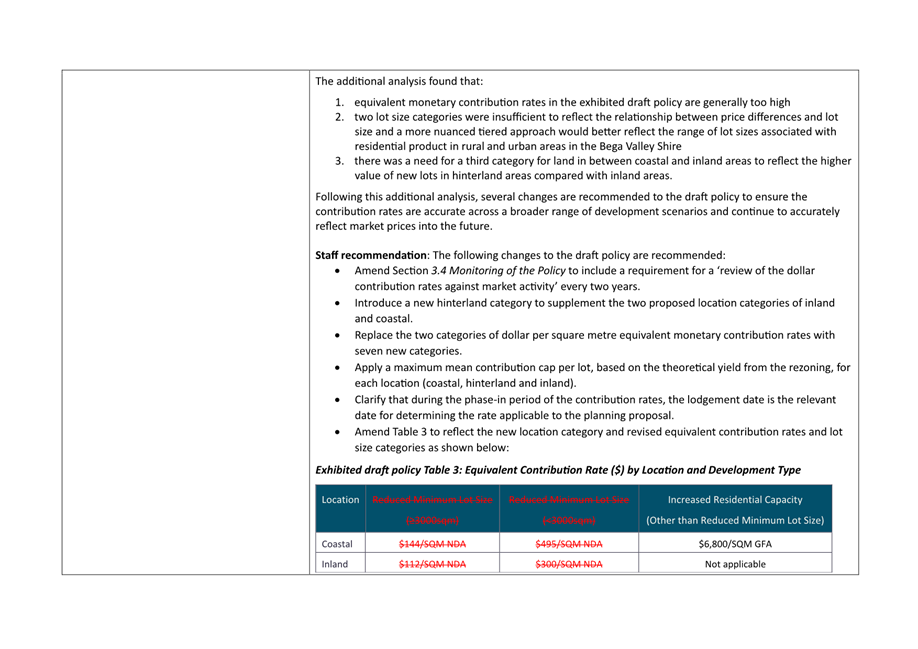
Staff recommendation: The following changes to the
draft policy are recommended:
· Amend Section 3.4 Monitoring of the Policy to include a requirement for
a review of the dollar contribution rates against market
activity every 2 years.
· Introduce a new
hinterland category to supplement the two proposed location categories of
inland and coastal.
· Replace the two
categories of dollar per square metre equivalent monetary contribution rates
with seven new categories.
· Apply a maximum
mean contribution cap per lot for each location (coastal, hinterland and
inland).
· Clarify that
during the phase-in period of the contribution rates, the lodgement date is the
relevant date for determining the rate applicable to the planning proposal.
· Amend Table 3
to reflect the new location category and revised equivalent contribution rates
and lot size categories as shown below:
Exhibited draft policy Table 3:
Equivalent Contribution Rate ($) by Location and Development Type
|
Location
|
Reduced Minimum
Lot Size
(≥3000sqm)
|
Reduced Minimum
Lot Size
(<3000sqm)
|
Increased
Residential Capacity
(Other than
Reduced Minimum Lot Size)
|
|
Coastal
|
$144/Sqm NDA
|
$495/Sqm NDA
|
$6,800/Sqm
GFA
|
|
Inland
|
$112/Sqm NDA
|
$300/Sqm NDA
|
Not applicable
|
Revised draft policy Table 3:
Equivalent Contribution Rate ($) by Location and Development Type
|
Location
|
Reduced Minimum
Lot Size ($/SQM NDA)
|
Increased Residential
Capacity other than Reduced Minimum Lot Size
($/Sqm NDA)
|
|
<=1,000
|
1,001-2,999
|
3,000-4,999
|
5,000-9,999
|
10,000-19,999
|
20,000-49,999
|
>50,000
|
Maximum mean contribution per lot1
|
|
Coastal
|
$400
|
$140
|
$110
|
$70
|
$55
|
$32
|
$13
|
$14,000
|
$6,800
|
|
Hinterland
|
$290
|
$120
|
$95
|
$60
|
$50
|
$28
|
$11
|
$12,000
|
Not applicable
|
|
Inland
|
$240
|
$100
|
$40
|
$35
|
$30
|
$25
|
$9
|
$10,000
|
Not applicable
|
1 Based on the theoretical yield
3) Issue: The policy will be ineffective, the
contribution rate is set too low, and some types of contributions are more
preferrable than others.
Staff response: The draft policy signals to the
market Council’s expectations for public benefit (specifically affordable
housing) when a proponent submits a planning proposal that seeks to increase
the residential capacity of the land. Similar policies adopted by other
councils in NSW have been demonstrated to be effective.
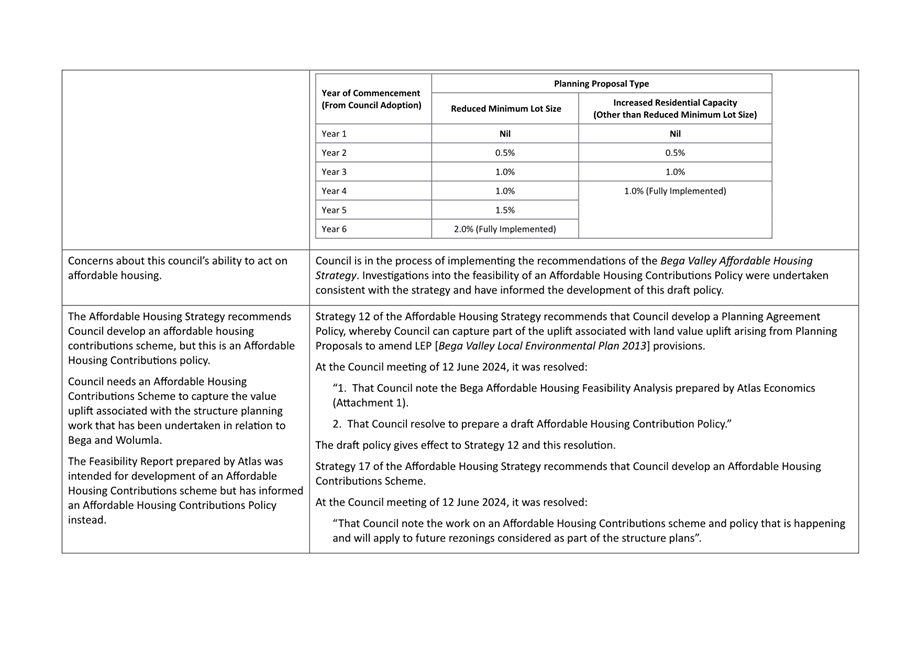
The recommended contribution rate of 3% in the Bega
Affordable Housing Feasibility Analysis was provisional, as several cost
items were unknown at the time. Further analysis by Atlas Economics during the
preparation of the draft policy resulted in the recommendation for 2% over a
6-year phase-in period, to give the market time to adjust.
The dedication of land or in-kind affordable housing
contributions are only valuable where it is suitable. In other circumstances,
equivalent contributions of cash may be preferrable to Council and the
partnering CHP.
Staff recommendation: No change to the draft policy.
4) Issue: Inland areas where increased gross floor
area is sought should be included in the contributions policy.
Staff response: Higher density residential
development in inland locations is not expected to be viable at a large scale
in the short-medium term. Any development of this type that does occur is
expected to be opportunistic (e.g. where someone already owns a vacant block of
land) and on a small scale. As such, affordable housing contributions are
currently not feasible for development of this nature. Council reviews
its policies every four years and can consider this matter as part of future
policy reviews.
Staff recommendation: No change to the draft policy.
5) Issue: The policy will deter investment in housing
development and rezoning, and is not the role of Local Government.
Staff response: Affordable housing contributions
capture only a small portion of the value uplift that is gained when land is
rezoned and allocates this to the provision of affordable housing. The Bega
Affordable Housing Feasibility Analysis demonstrated there is an
opportunity for Council to levy affordable housing contributions for certain
proponent-led rezonings without adversely affecting development feasibility.
Under current NSW Government requirements, where land is
proposed to be rezoned for more intensive residential use, land must first be
identified within a Council or NSW Government strategy. Even
though proponents must prepare a planning proposal that demonstrates the land
is suitable for the proposed use, the owners of land identified in a Council
strategy benefit because they are provided with an opportunity to rezone their
land that other landowners do not have, and which typically results in
significant land value uplift and is very profitable.
Under the current NSW planning framework, affordable housing
contributions can be charged by either a scheme or a policy providing it meets
legislative requirements. Within these parameters, individual councils can
choose whether to apply contributions for affordable housing.
Staff recommendation: No change to the draft policy.
6) Issue: Concerns about this council’s ability
to act on affordable housing.
Staff response: Council is currently implementing the
recommendations of the Bega Valley Affordable Housing Strategy.
Investigations into the feasibility of an Affordable Housing Contributions
Policy were undertaken in accordance with the strategy and have informed the
development of this draft policy.
Staff recommendation: No change to the draft policy.
7) Issue: Will the draft policy enable more rural
residential subdivision?
Staff response: The draft policy applies to
proponent-led rezoning proposals that create additional rural residential
supply. However, it does not enable additional rural residential subdivision in
addition to the provisions that currently exist under BVLEP 2013 and Council’s
Rural Residential Land Strategy.
Recommendation: No change to the draft policy.
8) Issue: Support for draft policy as a positive
measure to address the need for more affordable housing.
Staff response: Noted.
Recommendation: No change to the draft policy.
Engagement planned
No further engagement on the
draft policy is planned, however should the policy be adopted, Council
staff will begin the process to enter into an agreement with a CHP to maximise
the benefits of any contributions received.
Financial
and Resource Considerations
The project was funded through local infrastructure
contributions plan revenue as part of the $160,000 budget allocation to
‘develop and deliver a new local infrastructure contributions plan and
planning agreement policy, including investigation and development of an
affordable housing contributions policy’. Development of the Draft
Affordable Housing Contributions Policy was included in the existing budget
allocation for this project.
Legal
/Policy
Affordable housing contributions are levied under section
7.32 of the Environmental Planning and Assessment Act 1979.
Impacts
on Strategic/Operational/Asset Management Plan/Risk
Strategic
Alignment
The draft policy aligns with the strategic objectives of the
Bega Valley Community Strategic Plan 2042 (2025 revision), including:
A connected and vibrant community where people are happy, safe and well;
and Local leadership is strong, consultative and responsive to our
community’s needs.
The draft policy aligns with the Bega Valley Shire Local
Strategic Planning Statement Planning Priority 11 Housing: Residential
areas provide a range of housing styles, sizes and tenures that suit people of
all ages, income levels and household sizes and enable communities to stay
connected and healthy as people move through the various stages in life.
The draft policy will deliver Strategy 12 of the Bega
Valley Shire Affordable Housing Strategy: Council will develop a
Planning Agreement Policy under section 7.4 of the Act, whereby Council can
capture part of the uplift associated with land value uplift arising from
planning proposals to amend LEP provisions, and/or proposed variations to
planning controls.
The draft policy aligns with the key response area of the Bega
Valley Shire Climate Resilience Strategy: Safe, healthy and inclusive
community.
Environment
and Climate Change
Application of the draft policy will not have an adverse
impact on the environment or climate change.
Economic
Application of the policy will
provide a source of land and funding for affordable housing projects in the
shire. The Bega Affordable Housing Feasibility Analysis demonstrated there is
an opportunity for Council to levy affordable housing contributions for certain
proponent-led rezonings without adversely affecting development
feasibility.
Risk
Risks to
Council from the application of the draft policy will be addressed through
development of an appropriate governance framework for the collection and
expenditure of funds received.
Social
/ Cultural
Council has recognised there is a
need for more social and affordable housing in the Bega Valley Shire.
Application of the policy will provide a source of funding for the provision of
affordable housing that will benefit members of the local community.
Attachments
1⇩. Amended
draft Policy 4.19 Affordable Housing Contributions
2⇩. Draft
Affordable Housing Contributions Policy Summary of Issues
|
Council
|
17 September 2025
|
|
Item 8.2
- Attachment 1
|
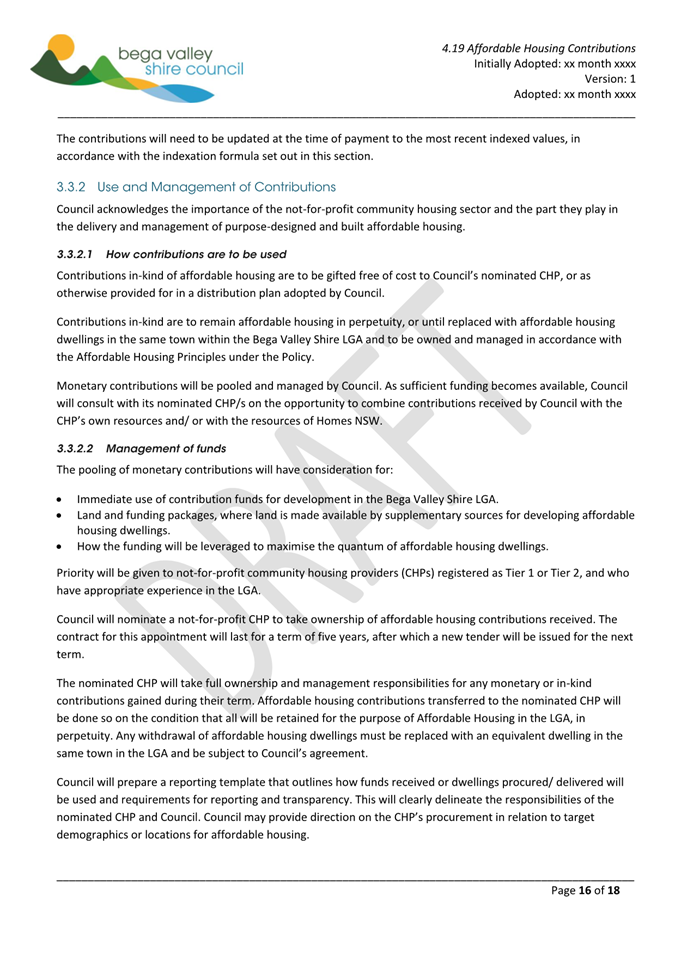
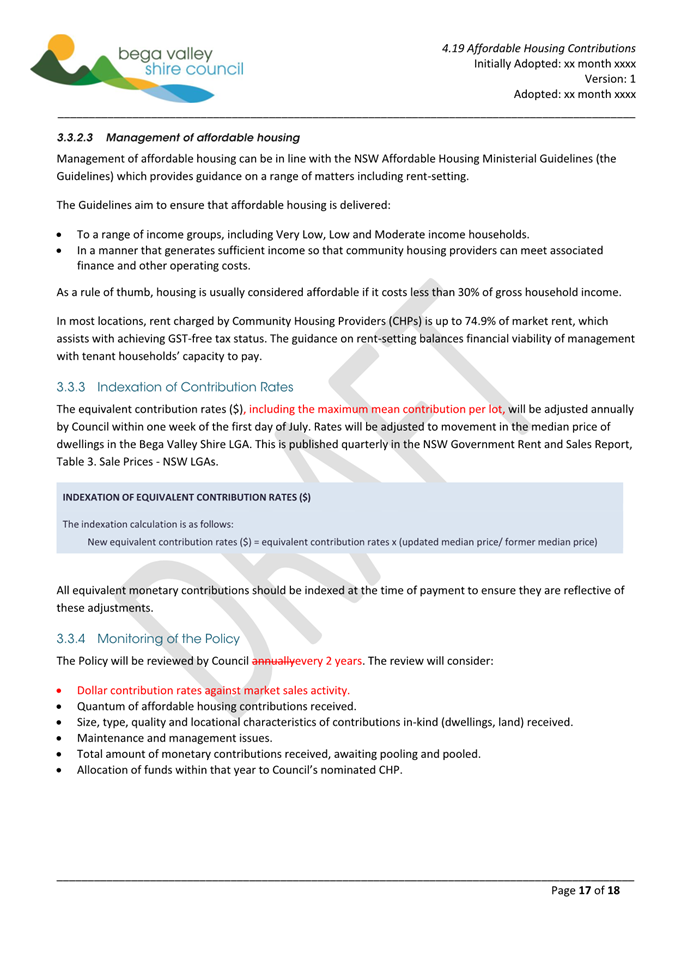
Amended draft Policy 4.19 Affordable Housing Contributions
|







|
Council
|
17 September 2025
|
|
Item 8.2
- Attachment 2
|
Draft Affordable Housing Contributions Policy Summary of
Issues
|




Council 17 September 2025
|
Item
8.3
|
8.3. Tura Marrang
Library and Community Centre ground floor (lower level) redevelopment
This report provides an update on the progress of the
redevelopment of the lower level of the Tura Marrang Library and Community
Centre and seeks direction on the next steps regarding the proposed
redevelopment.
Director Community Environment and Planning
Officer’s Recommendation
That Council:
1. Notes
this report and the progress made on the redevelopment of the lower level of
the Tura Marrang Library and Community Centre
2. Resolves
to take no further action in redeveloping the lower level of the Tura Marrang
Library and Community Centre unless grant funding becomes available, noting
minor works will be undertaken to address the environmental conditions to
support the current SECCA collection storage needs funded from the current
Facilities Maintenance budget.
Executive Summary
Council resolved in May 2023 to call for expressions of
interest (EOI) from organisations and/or businesses interested in leasing
spaces in the lower level (ground floor) of the Tura Marrang Library and
Community Centre.
The EOI was based on the approved development consent
(approved 15 April 2024) which included redevelopment of the lower level to
include a community meeting room, offices and amenities for a mixed-use
facility including library and gallery storage.
Expressions of Interest were sought from 13 November 2024
until 28 February 2025. No expressions of interest were received.
While no
commercial or community group interest in utilising the lower level generated
from the EOI, we still require appropriate storage space for the South East
Centre for Contemporary Art (SECCA) Collection also housed in the lower level
space. An allocation of funds from the Facilities Maintenance budget will be
used to support HVAC and minor internal works for the art storage area to
ensure it is fit for purpose.
Background
Council acquired the Tura Beach Tavern in 2013. In 2016 the
upper floor of the building was developed into a library and community centre.
Due to the cost of renovation, the lower level (ground floor) was not developed
and remained unoccupied apart from use as storage.
In 2018 Council resolved to redevelop the lower level of the
Tura Marrang Library as leasable tenancies and meeting rooms. Architectural
plans were developed and a development application approved in April 2023.
In May 2023, Council resolved to call for expressions of
interest (EOI) from organisations and/or businesses interested in leasing
spaces in the lower level (ground floor) of the Tura Marrang Library and
Community Centre prior to committing any funds to enact the DA consent.
The resolution was as follows (available at Item 8.2 in the Minutes
of Council - 24 May 2023):
RESOLVED on the motion
of Crs Fitzpatrick and Allen
That Council:
1.
Notes this report and the progress made on the redevelopment of Tura Marrang
Library and Community Centre
2.
Resolves to lodge the development application based on the plan at Attachment 2
to seek approval for the use of the ground floor as leasable commercial and/or
community use and library and gallery storage
3.
Calls for expressions of interest from organisations and/or businesses who are
interested in leasing the spaces if a development consent is provided and prior
to the redevelopment commencing, and that this use is based on a financial
return to Council
4.
Endorse staff to seek grants to allow for construction to occur, if a
development consent is provided
5.
Notes that the results of the EOI and future funding options for
the redevelopment will be reported to Council prior to the redevelopment
commencing
6.
That staff provide specific information on the merits or otherwise
of funding works at Tura Murrang Library in the report that presents the
2023/24 draft budget to council for finalisation
In favour:
Crs Fitzpatrick, Seckold, Allen and O'Neil
Against:
Crs Nadin, Porter and Wright
Absent:
Crs Griff and Robin
In line with the resolution, Expressions of Interest were sought from 13
November 2024 until 28 February 2025. No expressions of interest were received.
No grant funding has been identified to fund the development
of the lower level as a commercial space.
A NSW Government Public Library Infrastructure Grant could
offer funding for public library buildings capital works. Applications for
projects that will deliver a capital asset with a direct outcome for the
community are encouraged and require a Council co-contribution.
However, the lower level of the Tura Marrang building would
only be considered eligible for a grant if the connection between the upper and
lower level (lift) was reinstated and the community meeting area had a defined
purpose and operational model. If the lower level is used purely for commercial
benefit such as commercial leases, it is unlikely Council will attract any
state or federal grant funding for the works.
Gallery storage
The SECCA Collection is a significant public asset,
comprising over 400 works and conservatively valued at more than $5.5 million.
As custodians of this collection, SECCA and Bega Valley Shire Council have a
duty to ensure its long-term care, accessibility and preservation in line with
national standards and museum best practice.
The approved DA includes storage space for the SECCA
collection, allowing for an estimated 50% of the collection to be stored there,
with the remainder housed at the gallery. In the absence of the DA being
activated, approximately $50,000 from the Facilities Maintenance budget will be
used to support HVAC and minor internal works for the art storage area to
ensure suitable conditions for gallery storage.
Other options
The lower
level of the Tura Marang library and community centre was previously identified
by Council’s Museum Advisor as a potential storage space for significant
artefacts from the shire’s museums. A future action was subsequently
included in the Bega Valley Arts and Culture Plan 2024/25-2029/30 to explore
the provision of in-kind support and collaboration with museums on shared
storage space to provide a centralised location to address future disaster
preparedness or where museums close and collections are at risk of being
dispersed or lost. It is important to note there is currently no allocated
resourcing or budget for this work.
Options
Council could resolve to:
· Not progress with
the redevelopment of the lower level (ground floor) of the Tura Marang Library
unless external grant funding is available, noting this is unlikely unless the
full level is allocated for community purposes. If the DA is not commenced, it
will lapse on 15 April 2029. Minor works to update storage conditions for the
SECCA Collection will be undertaken in the meantime.
· Allocate funding
from the general fund in future years to redevelop the lower level in
accordance with the approved DA to undertake the minimum level of works
required to advertise the lower level as leasable spaces as ready for
commercial tenanted occupation. This would include further works to ensure the
gallery storage space was appropriate for Council’s collection into the
future, noting minor works would still be required in the interim. The LTFP
currently includes funding in Model A only.
· Direct staff to
consider alternative uses for the site, including museum storage and/or
community space, noting this would need to be considered as part of the FY27
Delivery Plan and budget process as it is not currently scoped or resourced.
Community
and Stakeholder Engagement
Engagement undertaken
A media release and Have Your Say page were published in
November 2024 seeking expressions of interest for use of the lower level.
Social media posts were publicised on 14 November 2024, 13
January and 18 February 2025.
The information was shared on Council’s website and
the library website with responses directed to the Have your Say webpage. The
EOI remained open until 28 February 2025.
Only one group requested a tour of the site and did not
submit a formal EOI by the closing date.
Engagement planned
Future engagement will be planned, as required, to meet
Council’s direction.
Financial
and Resource Considerations
No grant funding has been identified to fund the development
of the lower level as a commercial space.
A NSW Government Public Library Infrastructure Grant could
offer funding for public library buildings capital works. Applications for
projects that will deliver a capital asset with a direct outcome for the
community are encouraged and require a Council co-contribution.
However, the lower level of the Tura Marrang building would
only be considered eligible for a grant if the connection between the upper and
lower level (lift) was reinstated and the community meeting area had a defined
purpose and operational model. If the lower level is used for purely commercial
benefit such as commercial leases, it is unlikely Council will attract any
state or federal grant funding for the works.
Council’s Long Term Financial Plan (LTFP) includes
$520,000 in 2034/35 as an allocation in the ‘Option A’ Funding Our
Future model of the Assessment Management Plan to redevelop the lower level of
the Tura Marrang library in accordance with the approved DA (2023.147).
However, the DA consent will lapse on 15 April 2029 unless practical
commencement is achieved.
The LTFP also includes $329,409 in ‘Option A’ in
FY27/28 for gallery storage.
With no responses to the expression of interest it is
difficult to identify the market appetite for premises like these. The current
underdeveloped state of the lower level may have deterred prospective tenants
due to the amount of work required to develop the space to a habitable standard
and the corresponding time required to complete the works.
The minor works required to ensure suitable conditions for
the gallery storage space will be funded from the Facilities Maintenance current
budget and are estimated to cost $50,000. This will include HVAC and minor
internal works necessary to maintain and preserve the collection in accordance
with the required standards.
To date, $22,802 has been spent from the buildings Reserve
in previous years for the development of the architectural plans and
Development Application submission for the redevelopment of the lower ground
floor.
Legal
/Policy
Pending the resolution of Council, any redevelopment work
will need to comply with the conditions of the DA. As discussed in the May 2024
Council, any future leases will need to comply with Council’s Management
of Leases and Licenses Procedure.
Impacts
on Strategic/Operational/Asset Management Plan/Risk
Strategic
Alignment
This initiative aligns with the Community Strategic Plan
2042 -2025 Revision.
Our Community: A.1 Provide and
support opportunities for social interaction, arts and culture, activities and
events.
This initiative supports the implementation of
Council’s adopted Delivery Plan 2025-2029 as identified through the
following Focus Project:
Review collection
management procedures and processes - SECCA
Environment
and Climate Change
There
are no broader environmental or climate change implications associated with the
report recommendation.
Economic
The proposed redevelopment of the lower level (ground floor)
aims to maximise the potential of an existing, underutilised Council building,
offering both an economic return to Council and premises suitable to house
organisations or businesses. While there were no responses to the EOI, the
current underdeveloped state of the lower level may have deterred prospective
tenants due to the amount of work required to develop the space to a habitable
standard and the corresponding time required to complete the works.
Risk
Should Council resolve to take no action, the lower level
will continue to be underutilised and it is unlikely Council will be able to
attract grant funding for development of a primarily commercial space,
particularly with no co-contribution.
No other Council facility has been identified for storage
for the gallery. The current storage conditions have been identified as not
meeting the required environmental and quality standards for artworks and
future upgrade of the storage area or identification of alternative storage
space is required to ensure the collection can be maintained appropriately.
Social
/ Cultural
Tura Marrang Library already supports and encourages social
cohesion by bringing together individuals and community groups of all ages. It rivals
Bega as the shire’s busiest library, averaging nearly 4,000 visits per
month.
Between January and July 2025, the Tura Marrang Library
meeting spaces hosted 323 bookings (average 53 bookings per month) by external
groups or for internal library programs. Community groups, agencies and
government agencies are regular users of the library meeting rooms which also
support users through access on evenings and weekends when the library is
closed.
SECCA is a nationally recognised
exhibition space which aims to bring community together, to showcase the
area’s identity, history, creativity and culture, through engagement with
the arts.
The gallery delivers valuable and vibrant visual arts
programming to the South East through exhibitions, education and collection
programs aimed at increasing cultural tourism in the region.
Attachments
Nil
|
Council 17 September 2025
|
Item 8.4
|
8.4. Development
Application statistics - April to June 2025
This report provides an update on
Council’s development application processing timeframes for the period
April to June 2025.
Director Community Environment and Planning
Officer’s
Recommendation
That Council
note the information contained in this report.
Executive Summary
This report provides an update on Council’s
development application processing timeframes and associated commentary for the
period 1 April to 30 June 2025.
During this period, the average net DA processing time (i.e.
minus ‘stop clock’ days) was 44.02 days, compared to the 2024
calendar year net average of 92.69 days. (‘Stop
clock’ days is the time taken for the Applicant to provide additional
information.)
The average gross DA processing time for this period was
166.25 days (compared to 162.03 days in the 2024 calendar year).
These results should be interpreted with caution as
processing time varies based on the number and complexity of DAs, as well as
resourcing levels during the reporting period.
Background
Development Application processing times
|
|
2024
Apr-Jun
|
2024
Jul-Sept
|
2024
Oct-Dec
|
2024
(full
year)
|
2025
Jan-Mar
|
2025
Apr-Jun
|
|
DAs
determined+
|
103
|
88
|
80
|
343
|
55
|
77
|
|
New
DAs received^
|
110
|
102
|
126
|
389
|
107
|
84
|
|
No
of undetermined DAs@
|
209
|
172
|
168
|
168
(as at 31 Dec)
|
182
(as at 31 Mar)
|
157
(as at 30 Jun)
|
|
Average
DA processing time (gross)
|
163.19
days
|
175.96
days
|
142.51
days
|
162.03
days
|
118.78
days
|
166.25
days
|
|
Average
DA processing time (net - ie minus ‘stop clock’ days)*
|
91.43
days
|
93.77
days
|
77.99
days
|
92.69
days
|
67.86
days
|
44.02
days
|
|
Estimated
cost of construction (approved)
|
$35,300,670
|
$34,268,969
|
$55,643,115
|
$170,178,307
|
$15,554.475
|
$103,903,646
|
Notes:
- The
statistics provided here are based on current Council data and reporting
mechanisms and may not completely align with data provided on the NSW Planning
Portal and NSW Government’s Council league table.
- + DAs
determined does not include Modification Applications.
- ^ Not
all DAs received will necessarily go through to determination. Some are
withdrawn by Applicants or are returned for more information.
- *Stop
Clock days is the time taken for the Applicant to provide additional
information. This time may not be counted as processing time for the purpose of
the deemed refusal period.
- @Total
number of undetermined applications includes Modification Applications
Outlier impacts for this reporting period
Within this reporting period, DA 2013.217 for a
subdivision at Lakewood Drive Merimbula was determined by Council. This was a
legacy application which remained undetermined for an extended period of time,
totalling 4,297 gross days including 4,144 days under ‘stop clock’,
with net assessment days being 153. This application does not appear in the
Council League table results because it was submitted prior to the commencement
of the NSW Planning Portal, and has not been included in the table above. If it
was included, the average gross processing days would increase to 219.21 days
for this quarter.
Minister’s Statement of Expectations Order
2024
The Environmental Planning and Assessment (Statement of
Expectations) Order 2024 came into effect on 1 July 2024. The Minister for
Planning and Public Spaces, the Honourable Paul Scully MP, made the order to
set the expectation for councils in relation to their performance of a range of
planning and development functions under the Environmental Planning and
Assessment Act 1979.
The Bega Valley was set a gross average Lodgement time of 14
days and a gross average DA processing time of 115 days for the period of 1
July 2024 to 30 June 2025.
According to Council statistics, Bega Valley Shire
Council’s 2024/25 financial year gross average lodgement time was 15
days, and the gross average assessment time was 162.03 days. In the quarter
April to June 2025, the average gross processing time was 166.25 days.
However, different parameters are used by the State
Government in the Council league table which tracks gross DA assessment
timeframes across the state. Information from this data set is provided below:
Extract from Council League Table
|
|
April
2025
|
May
2025
|
Jun
2025
|
2024/25
(full
year)
|
|
DAs
assessed
|
16
|
30
|
29
|
291
|
|
Lodgement
days
|
10
days
|
13
days
|
23
days
|
15
days
|
|
Average
assessment days (gross)
|
142
days
|
146
days
|
138
days
|
137
days
|
The graph below provides time series data from the League
Table for the 2024/25 financial year. Importantly, assessment times decreased
significantly across the year.

The Council league table is available online at: https://app.powerbi.com/view?r=eyJrIjoiMTlhNjZhZjItMWU1ZS00ZjE1LWI1YWUtMzY5YmIzYjM2ZjE2IiwidCI6Ijk2ZWY4ODIxLTJhMzktNDcxYy1iODlhLTY3YjA4MzNkZDNiOSJ9
2025/26 Targets
Under the Environmental Planning and Assessment (Statement
of Expectations) Order 2024, the Bega Valley’s target gross average
Lodgement time for the 2025/26 financial year has been reduced to 7 days for
Lodgement and a gross average DA processing time of 105 days. Staff will
continue to work towards meeting these targets.
Contributing factors
Council’s ability to meet the new targets depends, in
part, on the completeness of the applications received. In order to meet the
Lodgement timeframe, incomplete or low quality development applications will be
returned and applicants will need to resubmit once they have completed or
improved the application. Additionally, a much smaller window of time for
applicants to pay their DA fees will be required in order to meet the new
target. The development professionals groups has been advised of the changes, however
they are likely to result in frustration as the impacts are experienced by
applicants.
Secondary Dwellings
At a recent Council meeting, Councillors enquired as to
how many Secondary Dwellings have been approved by Council in the last two
years. Council’s records indicate that 11 Secondary Dwelling development
applications have been approved since 1 July 2023. The location of these
developments was across rural and residential settlements, and within a range
of zones. The average development application fee was $2,140. Two applications
were subject to Section 7.11 Contributions, as they were assessed in accordance
with the most recent Council adopted Local Infrastructure Contributions Plan
(which specifies a contribution of $9,121.00). Water and/or sewer headworks
contributions were levied on two of the applications, as the development
exceeded the number of bedroom credits available for the existing allotment.
Development Assessment Service Review
In line with the resolution from April 2025, an RFQ
process was conducted to appoint a consultant to undertake a review of
Council’s end-to-end development assessment service. Morrison Low
Advisory has since been appointed to undertake the review, with consultation
commencing on 15 September. A final report is expected in late 2025.
Faster Assessments Incentive Program
The NSW Government has developed a $200 million Faster
Assessments Incentive Program to provide funding for infrastructure projects to
support increased housing.
This funding is only available to ‘medium and
high growth’ councils, and a small number of regional councils based on
projected growth figures. Bega Valley Shire Council has not been identified by
the Minister as meeting either of these definitions, and as such we are not
eligible to apply for a share of this funding.
‘Medium and high growth’ councils are those
with housing targets set by the Minister above 1,000 dwellings who have met the
Minister’s Expectations for gross DA processing times.
More information about the program is available here: https://www.planning.nsw.gov.au/policy-and-legislation/housing/faster-assessments-program/faster-assessments-incentive-program
Options
There are no options associated with this report.
Community
and Stakeholder Engagement
Engagement undertaken
Council has provided information on its website and through
media enquiries and statements as needed to alert the community to delays in DA
assessment timeframes as well as actions applicants and owners can take to
streamline the process.
Engagement planned
No further engagement is planned as a result of this report,
however website content will be updated as required to ensure the community is
aware of current DA assessment challenges. Further updates to the website will
be made over time to provide additional information to support applicants
through the DA process.
Financial
and Resource Considerations
Providing a development assessment service is a key part of
Council’s core business and budget. There are no new financial impacts
arising from this report.
Legal
/Policy
Providing a development assessment service is a key part of
Council’s core business. There are no new legal or policy impacts arising
from this report.
Impacts
on Strategic/Operational/Asset Management Plan/Risk
Strategic
Alignment
Development Assessment supports the five key themes in the
Community Strategic Plan 2042 (2025 Revision):
A. Our
community: We are a vibrant, respectful, inclusive and connected community that
enjoys a culturally rich community life. We are a resilient and caring
community that supports the health and wellbeing of our residents. Our
shire is a safe and affordable place to live.
B. Our
economy: Our economy is prosperous, diverse and supported by innovative and
creative businesses. We have meaningful employment and learning opportunities
for people at all stages in life. Our key industries are resilient and strong.
C. Our
environment: Our air and water are clean, and our natural environment and rural
landscapes are protected. We adapt to and mitigate the effects of climate
change. We are leaders in sustainable living and support innovative approaches
to resource use and sustainable design principles.
D. Our
infrastructure: Our infrastructure meets community needs. Our community has
access to quality community assets that support health and wellbeing. Our
transport networks support our community to work, learn and socialise.
E. Our
civic leadership: Government services have strong organisational practices that
deliver services and facilities to meet community needs. We are an informed and
engaged community with transparent, consultative and responsive Government
services.
Development applications are assessed in accordance with the
Bega Valley Local Environmental Plan, Development Control Plan, and state
government legislation.
Environment
and Climate Change
There are no environment or climate change impacts arising
from this report.
Economic
There are no new economic impacts arising from this report.
Development plays a key role in supporting the shire’s
economy, creating short term employment and, with commercial development,
creating longer term employment opportunities.
Risk
There are no new risks arising from this report.
Social
/ Cultural
There are no new social or cultural
impacts arising from this report. Development assessment enables housing growth
and supports a connected and supported community.
Attachments
Nil
|
Council
|
17 September 2025
|
Staff Reports
– Infrastructure
17 September 2025
9.1 Bega
Valley Local Traffic Committee 5 August 2025.......................................... 74
9.2 Merimbula
Airport General Aviation Precinct.................................................. 155
9.3 Reporting
of minutes- Section 355 General Sportsground Advisory Committee meeting 26 May
2025........................................................................................................... 172
|
Council 17 September 2025
|
Item 9.1
|
9.1. Bega Valley
Local Traffic Committee 5 August 2025
This report provides the
recommendations of the Local Traffic Committee (LTC) meeting held on 5 August
2025.
Director Infrastructure
Officer’s
Recommendation
That Council adopt the recommendations of the Bega Valley
LTC meeting held on 5 August 2025 as outlined below:
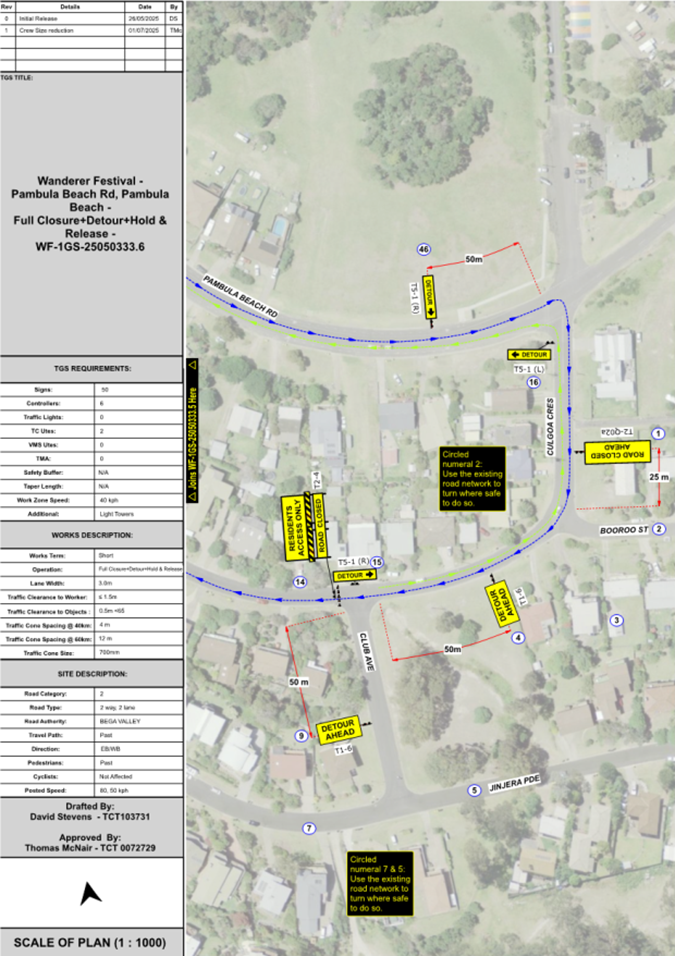
1. Wanderer Festival 2025 – Saturday 4 & Sunday 5
October 2025
a. That there is no
on street Parking along Pambula Beach Road; eastbound from Dingo Street to its
intersection with Culgoa Crescent; westbound from its intersection with Culgoa
Crescent to its intersection with Sir William McKell Drive. This is to be
picketed and taped off with reflective tape to prevent parking in this area.
b. That buses
continue to enter Lumen Christi Catholic College via Pambula Beach Road and
exit onto Culgoa Crescent (with Traffic Control).
c. That there
is no right turn into Culgoa Crescent (western end) from Pambula Beach Road for
entirety of the event. Entry into Culgoa Crescent will be from the eastern end
of Pambula Beach Road, dropping patrons off at the existing school drop off in
Culgoa Crescent.
d. That, all up to
date Traffic Guidance Schemes (TGS) be supplied showing the changes above
complete with a traffic controller and vehicle at the intersection of Culgoa
Crescent and Pambula Beach Road (western end), preventing a right-hand turn
into Culgoa Crescent from Pambula Beach Road.
e. That one month
prior to the event date, all affected residents will be notified by letter drop
advising them of the proposed changes to traffic movements. The letter must
provide the residents with contact details of the event organisers
f. That there
is a reduction in the speed limit on Pambula Beach Road on days leading up to
and during the event to a 40km/h speed zone (160m west of the access driveway
to Sapphire Aquatic Centre to the intersection of Culgoa Crescent) and shown on
the TGSs.
g. That organisers
fully implement an approved Special Event Transport Management Plan. Police
have indicated as this is a proposed large-scale event there will be a minimum
60-day review time for Police approval.
h. That
organisers supply (prior to the event) copies of
owner’s consent for the use of the access driveways to Lumen Christi
Catholic College and from the NSW National Parks for permission to use the
access driveway entrance at Sapphire Aquatic Centre.
i. That
persons involved in the preparation and implementation of the Traffic Guidance
Scheme must hold the appropriate SafeWork NSW and Transport for NSW (TfNSW)
accreditation.
j. That
organisers have approved public liability insurance of at least $20 million
indemnifying Bega Valley Shire Council, NSW Police and TfNSW by name for the
event.
k. That
organisers have written Police approval prior to conducting the event.
l. That
the event achieves all conditions of Council’s DA2023.85.
m. That, as a prerequisite
of the proposed changes to traffic movements, the event organisers must notify
all, local and interstate bus services along with local taxi services and other
affected stakeholders of alternative routes including pick-up/drop-off points,
including point to point transport.
n. That after
the event, organisers are to clean up any rubbish or waste left behind.
o. That the event operates strictly under
the NSW Health Department COVID19 conditions.
p. That
the ‘Residents Only’ signage on be removed for the period of the
event and re-instated thereafter.
q. That
clear parking directions, including appropriate signage for recommended parking
areas, be provided.
r. That
organisers include considerations for bushfire and weather management in their
plans.
s. That
a pedestrian management plan be incorporated into the TGS.
2. Hot Rodders
Show n Shine, Eden – Sunday 19 October 2025
a. That, subject to
conditions, Imlay Street, Eden be temporarily closed between Bass Street and
Chandos Street between 9.00am and 12.30pm on Sunday, 19 October 2025 for the
Eden Show n Shine car display.
b. That, the proposed
arrangement involving road closures with an on-road assembly, the following is
to be included in the TGS to physically obstruct access to the closed road.
i) The
road closed (T2-4) sign must be used in conjunction with barrier boards at the
start of the site to prohibit general road user access.
ii)
At least 1-2 Traffic control vehicles to be used to physically obstruct access
to closed roads to supplement delineation devices if
delineation devices alone are insufficient.
3.
Review of Signs and Line Markings – Subdivision DA2009.0263 (Lot 2
DP124577), 340 Old Wallagoot Road, Wallagoot
Installation
of No Stopping Signage, as per sign and lines plan provided
a. Cul-de-sac
Area
Chainage
365 (Northbound): No Stopping – Right Arrow (R5-400(R))
Chainage
365 (Southbound): No Stopping – Left Arrow (R5-400(L))
Chainage
400: No Stopping – Double Arrow (R5-400(L+R))
b. Subdivision
Entry Road
Chainage
140 (Southbound): No Stopping – Right Arrow (R5-400(R))
Chainage
20 (Southbound): No Stopping – Left Arrow (R5-400(L))
Chainage
160 (Northbound): No Stopping – Left Arrow (R5-400(L))
c. Wallagoot
Road (between Shady Lane and Subdivision Roadway)
Chainage 140
(Old Wallagoot Road, Northbound): No Stopping – Right Arrow
(R5-400(R))
d. That,
a review of signage and line marking is required.
e. It
was also noted that safety considerations, as outlined above, should be
highlighted as per below:
i) The cul-de-sac must remain
unobstructed to facilitate safe turning movements.
ii) The sharp curves at the subdivision
entry require clear carriageways to prevent accidents and ensure safe
navigation.
iii) Maintaining clear zones at intersections
will support better traffic flow and reduce potential hazards.
4.
Bermagui Safe System Assessment Report –
Pedestrian Crossing options
That,
subject to funding, Council approve the recommendations as contained in the
final Recommendations Report SSA Pedestrian Crossing Bermagui installation and
as outlined in Local Traffic Committee meeting minutes dated 5 August 2025.
5. Request to convert
taxi zone to loading zone – Beach Street Parking
That
council approve a 15-minute timed parking zone in place of one of the existing
taxi zones (closest to Waterfront Café) on Beach Street carpark
Merimbula.
Executive Summary
The LTC is primarily a technical review committee and is not
a Committee of Council. LTCs operate under delegation from TfNSW who are
responsible for traffic management on all NSW roads. Their role is to advise
Council on traffic management matters that relate to prescribed traffic control
devices or traffic management facilities for which Council has delegated
authority.
It is a requirement for Council to formally adopt the
recommendations from this Committee prior to action being taken.
The LTC will be transitioning to the Local Transport Forum
(LTF) due to a change in legislation.
Background
The following submissions for Council action were received
at the LTC meeting held 5 August 2025.
Wanderer
Festival 2025 – Saturday 4 & Sunday 5 October 2025
Council
have received a submission from Wanderer Festival event being held at the
Pambula Sporting Complex commencing 9.00am on Saturday 4 October to 12.00am
Sunday 5 October 2025. Setup will commence Wednesday 24 September
2025 and pack down completed by Friday 10 October 2025.
Wanderer is a
two-day music and arts festival that delivers economic, social and cultural
benefits to the Sapphire Coast region and New South Wales as a whole.
Unpowered campsites and amenities are provided for those opting to stay onsite.
Patrons will also be offered camping at an external campground with free bus
shuttles to site. The Event consists of four stages as well as shade
structures, vendors, catering, bars, back of house and campgrounds.
It is
anticipated that attendance will be up to 12,000 patrons for the 2025 event. It
is
expected that
at full capacity, a maximum total of approximately 1000 additional
attendees will
be present on site at one time including contractors, event personnel,
stall holders,
performers, security. Staff and contractor numbers may be scaled based on
the number of
tickets sold.
The following recommendations are subject to DA2023.85.
A copy of the submission is attached: “Wanderer
Application 2025”
Hot
Rodders Show n Shine, Eden – Sunday 19 October 2025
Council have received a submission from Eden Chamber of
Commerce for the Hot Rodders “Show n Shine” event to be held on
Imlay Street Eden, on Sunday 19 October 2025.
This event will accommodate the hot rods and classic cars
– Show n Shine car display and can attract anywhere from 200-250 people.
A copy of the submission is attached: “Eden Show n
Shine - ECC”.
Review
of Signs and Line Markings – Subdivision DA2009.0263 (Lot 2 DP124577),
340 Old Wallagoot Road, Wallagoot
Councils Senior Development Engineer has requested that the
Local Traffic Committee review the proposed signage and line marking plans for
the subdivision at 340 Old Wallagoot Road, Wallagoot (DA2009.0263).
The total carriageway width within the subdivision is 11
metres. To enhance safety and traffic flow, the following signage has been
proposed:
a. Cul-de-sac Area:
Three No Stopping signs are recommended to ensure the
cul-de-sac always remains clear. This is particularly important for vehicles
performing U-turns, especially waste collection trucks.
b. Subdivision Entry Road:
Three No Stopping signs are proposed at the entry point of
the subdivision due to the presence of sharp curves. These signs aim to
maintain clear sightlines and safe manoeuvrability.
c. Wallagoot Road (between Shady
Lane and Subdivision Roadway):
Additional No Stopping signage is suggested along this
section to improve intersection visibility and safety. The application of the
10-metre rule is recommended to keep the intersections at Shady Lane and the
subdivision roadway clear.
Safety Considerations:
• The cul-de-sac must remain
unobstructed to facilitate safe turning movements.
• The sharp curves at the
subdivision entry require clear carriageways to prevent accidents and ensure
safe navigation.
• Maintaining clear zones at
intersections will support better traffic flow and reduce potential hazards
See attached: Signs and Lines plan for LTC Old Wallagoot
Road WALLAGOOT.pdf
Bermagui
Safe System Assessment Report – Pedestrian Crossing options
The completed SSA by Stantec presents a range of options for
pedestrian crossing locations for Council's consideration. These options were
initially presented at the Local Traffic Committee meeting on 1 July 2025 for
review.
Council staff have since prepared a draft recommendation
report that outlines the SSA options and documents the outcomes and
recommendations provided by the Local Traffic Committee. This draft report is
attached and will be discussed for final review and endorsement, ahead of
submission to the Council meeting scheduled for 17 September 2025.
A copy of the Final report is attached: Final
recommendations report SSA Pedestrian Crossing Bermagui 140825.
All recommendations contained within these minutes are to be
read in conjunction with the Safe System Assessment recommendations
report.
Discussion of Option 1
SSA proposed option 1: Raised pedestrian crossing on Lamont
Street, east of the Bunga Street intersection.
All LTC representatives agree for Option 1 the crossing
point location provided in the SSA is not supported, and alternative locations
for the crossing point further to the east is preferred.
All LTC representatives agree that a raised crossing is not
supported, any pedestrian crossing implemented is to be a zebra crossing not a
raised crossing.
Following review of Option 1 by Council staff and the LTC.
The Committee notes the following be considered for future master planning of
this location subject to funding.
The proposed location from the Safe Systems Assessment is
indicated in attached SSA report image figure 3.5 (highlighted in Orange
“Approximate location of crossing”) is not supported due to the
proximity to the intersection and sight distance.
The committee alternatively recommends pedestrian crossing
point be located further to the east on Lamont Street, east of the Bunga Street
intersection (as highlighted in purple on the attached SSA report image Option
1B).
The LTC recommends that this
revised proposal be in future referred to as Option 1B and that the committee
recommends future funding applications should include both the upgrade of the
existing footpath extension and zebra pedestrian crossing.
Stantec in their Safe Systems Assessment refer to wombat
crossings in various areas within Bermagui as possible recommendations. The LTC
acknowledges that wombat crossings aren't appropriate. Zebra crossings would be
more appropriate in all instances.
The LTC further recommends that any future masterplan work
incorporate Option 1B, including but not limited to consideration of location
of the pedestrian crossing further to east as indicated, connectivity to the
existing carpark and assessment of car parking configuration, connecting
footpath extensions, kerb extensions, potential raised driveway treatment from
road.
The LTC recommends future design consideration is given to
raise pavement on the car park exit to slow traffic and curb extensions for
safer crossings.
The LTC acknowledges and notes, that final endorsement of
the proposal Option 1B or future precinct planning is subject to funding and
precinct design assessment and that any future precinct planning that is funded
and achieves design stage will require the review of the Local Traffic
Committee and Council endorsement.
Summary recommendation by LTC for Option 1B:
The LTC acknowledges that final endorsement of the proposal
option 1B is supported subject to funding and precinct design and any future
precinct planning that is funded and achieves design stage will require review
of the LTC and Council again before being endorsed.
That all detailed recommendation outcomes as outlined in
Recommendations Report – Safe Systems Assessment Pedestrian Crossing
Bermagui are accurate and agreed by the LTC.
Discussion of Option 2
SSA proposed option 2: Raised pedestrian crossing on Lamont
Street, west of the Bunga Street intersection, including improvements at the
existing refuge on Bunga Street.
Following review of the SSA Option 2 by Council staff and
the LTC the following is determined.
Option 2 is not supported due to proximity to intersection,
potential for disruption to traffic flow, sight distance and heavy vehicle
movement.
Summary recommendation by LTC for Option 2:
Option 2 is not supported by the LTC due to proximity to
intersection, potential for disruption to traffic flow, sight distance and
heavy vehicle movement.
That all detailed recommendation outcomes as outlined in
Recommendations Report – Safe Systems Assessment Pedestrian Crossing
Bermagui are accurate and agreed by the LTC.
Discussion of Option 3
SSA proposed Option 3: Raised pedestrian crossing
approximately 150m west of the Lamont/Bunga Street intersection, near Bermagui
Country Club.
Following review of the SSA Option 3 by Council staff and
the LTC the following is determined.
The location of pedestrian crossing as outlined in Option 3
is supported.
The crossing type being a raised crossing is not supported,
alternatively a zebra crossing is supported. The recommendation for the
crossing to not be raised, takes into consideration any future master planning
that may occur for traffic arrangements at the intersection, the additional
cost and maintenance associated with a raised crossing and the cost associated
with road pavement damage should it need to be moved or relocated in the
future.
Note: This option will require lighting at any Zebra
crossing.
The option of a zebra crossing at this location is
identified to offer a more economical solution that can be implemented in the
short term subject to funding, without being reliant on future master planning
and to complement any future precinct design.
The LTC notes that the location of the bus stop in this
option is an important consideration and recommends the safest installation of
a pedestrian crossing is behind a bus stop not in front.
The LTC recommends council staff seek a grant to fund a
future crossing and path in Lamont Street to connect Harbour to CBD Bermagui.
Summary recommendation by LTC for Option 3:
The LTC acknowledges that implementation of Option 3 is
supported subject to funding with a zebra crossing instead of raised crossing.
There will be no community consultation if Council agree to
this option, as the community have already been very vocal stating this is a
preferred option.
Establish the crossing distance between both sides of the
road; curb extensions may be required to reduce this distance and improve
pedestrian safety. Refer to Australasian Pedestrian Crossing Facility Selection
Tool in this option.
Kerb extensions should include appropriate line marking and
fog lines, or alternatively, a pedestrian refuge should be considered.
Discussion of Option 4
Option 4: Roundabout at the Lamont Street/ Bunga Street intersection
The SSA Option 4 states as a further consideration, a
roundabout could be considered at the Lamont Street/ Bunga Street intersection.
Figure 3.10 as contained in the Recommendations Report – Safe Systems
Assessment Pedestrian Crossing Bermagui outlines the proposed location of the
roundabout.
The LTC notes a roundabout does not provide any priority
crossing facilities however, it can provide traffic/ speed calming measures,
which can aid in pedestrian safety at the intersection. On top of this, overall
safety at the intersection can be improved through this option.
Option 4 could be considered in future design and precinct
planning, noting this option presents a more significant capital project
investment. There is no current funding for this option in
Council’s long term financial plan, any future work to consider this
option would require external grant funding for design and construction.
Should Council be successful in obtaining external grant funding to progress
design and precinct planning that includes Option 4, then all design concepts
must be reviewed by the LTC, include community engagement and will require
Council endorsement.
The TfNSW representative considers Option 4 to be
beneficial, however separating pedestrian movement and vehicle movement is the
key issue at a roundabout. A roundabout does not provide the same level of
service as a pedestrian crossing for walking.
Reference to above is contained in the documents below and
should be referred to in any future planning/design stage:
- Austroads Pedestrian
Selection Tool
- Australasian Pedestrian
Crossing Facility Selection Tool
- Management Pedestrian
Facility Tool
Regarding the pedestrian crossing point at Bunga Street;
kerb extensions or pedestrian refuge will need to be reviewed in this instance.
Summary recommendation by LTC for Option 4:
The committee acknowledges that future design investigation,
concept design or precinct planning that may include Option 4 is supported,
however strictly subject to external grant funding.
Any future design should consider that kerb extensions will
require line marking and fog lines, or alternatively, a pedestrian refuge
should be considered.
Summary of Option 5
Option 5: Interim at-grade pedestrian crossing on Lamont
Street
As a temporary measure, whilst the details of the proposed
solution are finalised, an at-grade crossing could be proposed across Lamont
Street, in the same location as Option 1 (see Figure 3.5). This crossing would
be designed as a typical standard zebra crossing and would only be intended to
be for a temporary period.
As stipulated in option 1 the current proposed location for
any pedestrian crossing is not supported and alternative location as outlined
in Option 1B is to be considered.
Current lack of footpath connectivity and accessibility for
this location is of concern.
LTC discussion for Option 5:
This option was noted but struck out. Option 3 zebra
crossing is preferred as a short-term pedestrian crossing, short term low
complex implementation to be prioritised for council staff to seek funding
opportunities.
Intention of future community engagement:
Precinct planning for all options other than Option 3 will
be subject to Council processes and the "Have Your Say" community
consultation platform.
BVSC is to update the Recommendation Report – Safe
Systems Assessment Pedestrian Crossing Bermagui report to reflect the review
and recommendations as undertaken and agreed at the 5 August 2025 LTC meeting.
Council staff noted that a similar Safe Systems Assessment
(SSA) process and report is currently being prepared for Eden to present a
future LTC meeting.
A copy of the Final recommendation is attached: “Final
Recommendations Report_SSA_Pedestrian Crossing_Bermagui_140825”
Request
to Convert Taxi Zone to Loading Zone – Beach Street Parking
At the July 2025 LTC meeting, Councillor Porter submitted a
request to convert an existing Taxi Zone at Beach Street Parking into a Loading
Zone.
Councils Transport and Drainage Planning Engineer
investigated this request and reports as follows:
In accordance with the Guide to Traffic Management Part 11:
Parking Management Techniques and AS 2890.5 – Parking Facilities. The
existing Taxi Zone is 2.5m wide by 5.4m parking space, located within a
90-degree angle parking bay in an area with constrained turning movements.
Loading Zones, however, require a minimum width of 3.6
metres. The required length varies depending on the design vehicle:
Articulated Truck: 19.0 metres
Heavy Rigid Truck: 12.0 metres
Light Rigid Truck: 8.8 metres
Furthermore, loading zones should not be integrated with
angled parking configurations, as this can result in vehicle overhangs that
compromise adjacent bays and overall safety.
Based on the physical constraints of the existing parking
layout and the design requirements for loading zones, the proposed conversion
is not supported in its current form.
Alternative locations or configurations may need to be
considered to accommodate a compliant loading zone.
Discussion:
Relevant standards have been confirmed by councils Transport
and Drainage Planning Engineer, and it has been identified that the existing
infrastructure does not comply, as accessible parking requires additional
circulation space. Additionally, case studies highlight that overlapping
loading zones and car parks can impede accessibility, leading staff to oppose
combining a Loading Zone with an Accessible Parking Bay. As an alternative, a
15-minute parking zone was proposed by Cr Porter, with support from all
representatives for shorter-duration parking to replace one of the existing
Taxi Zones. Considerations for loading zone to be incorporated into the
upcoming Merimbula CBD upgrade.
Options
1. Accept the
recommendations provided by the Local Traffic Committee and resolve
accordingly.
2. Reject the
recommendations provided by the Local Traffic Committee and resolve
accordingly.
3. Resolve on alternate or modified
options raised by councillors.
Community
and Stakeholder Engagement
Engagement undertaken
Previous community engagement has been undertaken regarding
the Bermagui Safe Systems Assessment.
TfNSW have officially advised that the LTC will now be known
as the Local Transport Forum (LTF) necessitating some changes in the way the
LTF will operate in the future. Refer to the discussion regarding the
updated TfNSW Authorisation and Delegation Instrument that came into effect on
1 August 2025 under Legal/Policy issues following for further background.
Basic Changes:
As of 1 August 2025 – Local Traffic Committee will now
be the Local Transport Forum (LTF) – The LTF provides advice and
coordination
There is no voting at the LTF
What must be referred to the LTF?
Changes to a Prescribed Traffic Control Devices (PTCD) ie:
if a fine is associated with a device, then it is a PTCD
Proposals which, for longer than 6 months, restrict or
prohibit passage on a road of any persons, vehicles, or animals; or compel or
prevent a turn from one public road to another public road
With road closures more than 24 hours and interruption of
Bus Route / Public Transport – Bus Operator will be invited to attend the
Forum
What does not have to be referred to the LTF?
With road closures less than 24 hours and no public
transport interruptions there is only a need to notify Transport and Police as
an information item.
Traffic Management Plans are no longer mandatory at LTF
– however, councils are obliged to provide or require sufficient
information to enable reasonable assessment.
If TfNSW has concerns about a proposal, they have 7 days to
prepare a Statement of Concern (SoC) to the LTF members. A SoC does not oblige
a proposal to be altered or withdrawn. It supports transparency by ensuring
significant risks or issues are placed on the public record and openly
discussed and considered.
Council are to follow DORAS – NSW Design
of Roads and Streets Manual (TS00066).
Information attached:
· A guide for
councils using authorisation and delegation
· Briefing Pack-2025
Authorisation-Delegation to Council
· Local Transport
Forum fact sheet
Engagement planned
The presentation of this report to Council and the
notification of outcomes to relevant stakeholders are the remaining engagement
activities planned.
Financial
and Resource Considerations
There are
no additional financial and resource considerations associated with this report
from the above special events. The signage and line marking for
subdivision at Old Wallagoot Road will be funded through the project.
The
replacement of taxi zone sign to 15-minute parking sign at the location of
Beach Street in Merimbula will be funded through annual allocations for signage
maintenance.
There are
no additional financial and resource considerations associated with this report
from the above special events.
Legal
/Policy
An updated TfNSW Authorisation and Delegation Instrument
came into effect on 1 Aug 2025 revoking the previous 2011 Delegations to
Council and 2023 Temporary Delegation. The new 2025
Authorisation-delegation provides Council’s with TfNSW powers under s115
of the Roads Act 1993 to regulate traffic for any purpose. It also
provides Authorisation under s122 of the Road Transport 2013, for the use of
Prescribed Traffic Control Devices (PTCD).
Other changes relating to renaming the LTC to the LTF are
discussed earlier in the engagement section of this report including the
elimination of voting, new objection arrangements for TfNSW to lodge Statements
of Concern and sub-delegation to staff. Further details about the change
in Authorisation and Delegation impacts are available on the relevant TfNSW
project page here: Transport's Authorisation and
Delegation to Councils | Transport for NSW
Impacts
on Strategic/Operational/Asset Management Plan/Risk
Strategic
Alignment
The recommendations are in line with our road and reserve
management policies. The inherent risks associated with the events are
mitigated by adherence to the agreed Traffic Guidance Schemes and the
stipulations made by the LTC.
Environment
and Climate Change
There are
minor environmental impacts as a result of event waste management and no
Climate Change implications associated with this report.
Economic
There are a number of positive economic implications
associated with this report through increased local consumption of goods and
services from increased visitation.
Risk
There is a mitigation of traffic and public safety risk by
implementing the actions recommended by the LTC.
Social
/ Cultural
There are no additional social/cultural considerations
associated with this report
Attachments
1⇩. Wanderer
Application 2025
2⇩. Eden
Show n Shine - ECC
3⇩. Signs
and Lines plan for LTC Old Wallagoot Road WALLAGOOT
4⇩. Final
Recommendations Report_SSA_Pedestrian Crossing_Bermagui_140825
5⇩. A
guide for councils using authorisation and delegation
6⇩. Briefing
Pack - 2025 Authorisation-Delegation to Councils
7⇩. Local-Transport-Forum-(LTF)-Referrals-and-review-fact-sheet-4-July
2025
|
Council
|
17 September 2025
|
|
Item 9.1
- Attachment 1
|
Wanderer Application 2025
|
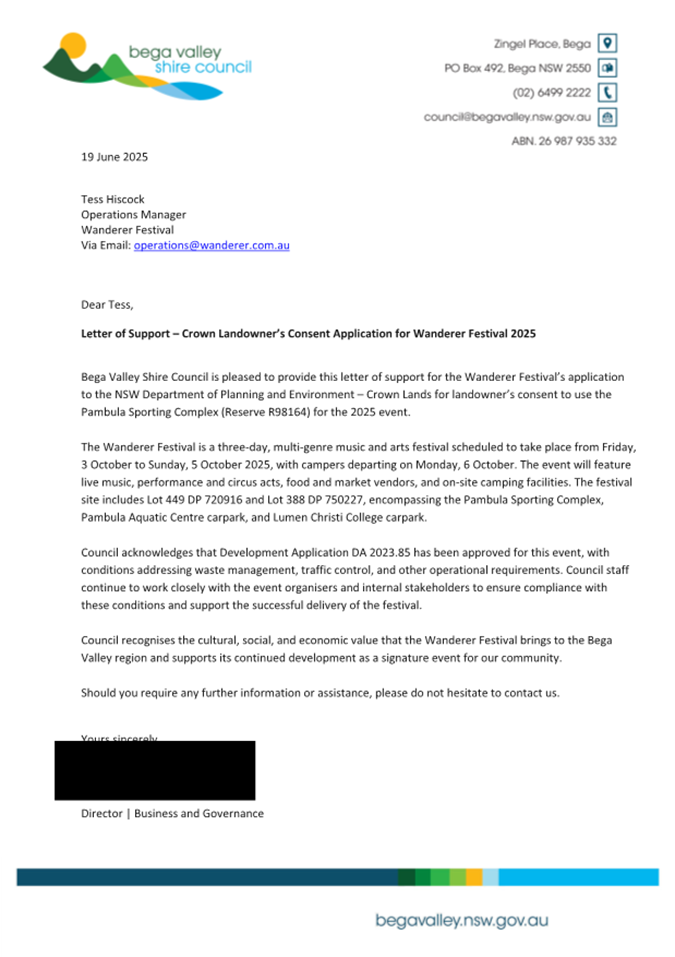
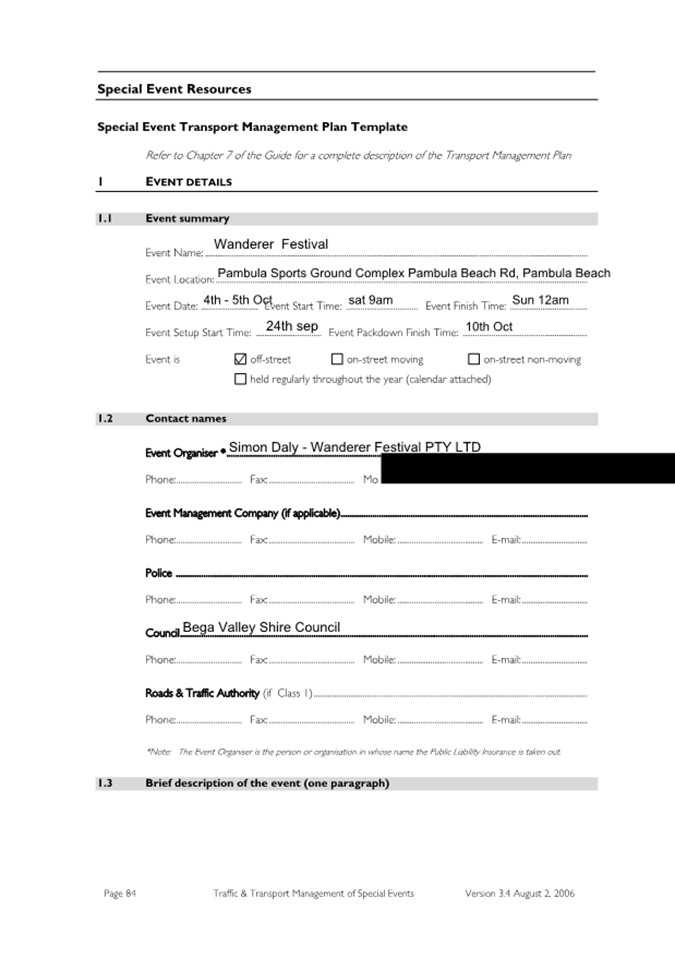


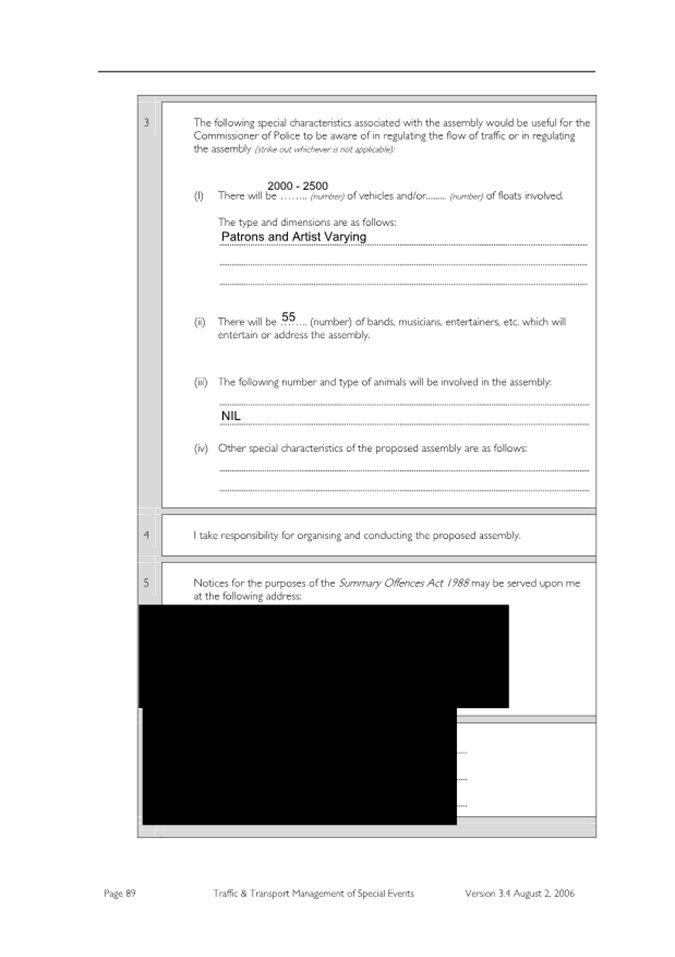
|
Council
|
17 September 2025
|
|
Item 9.1
- Attachment 2
|
Eden Show n Shine - ECC
|


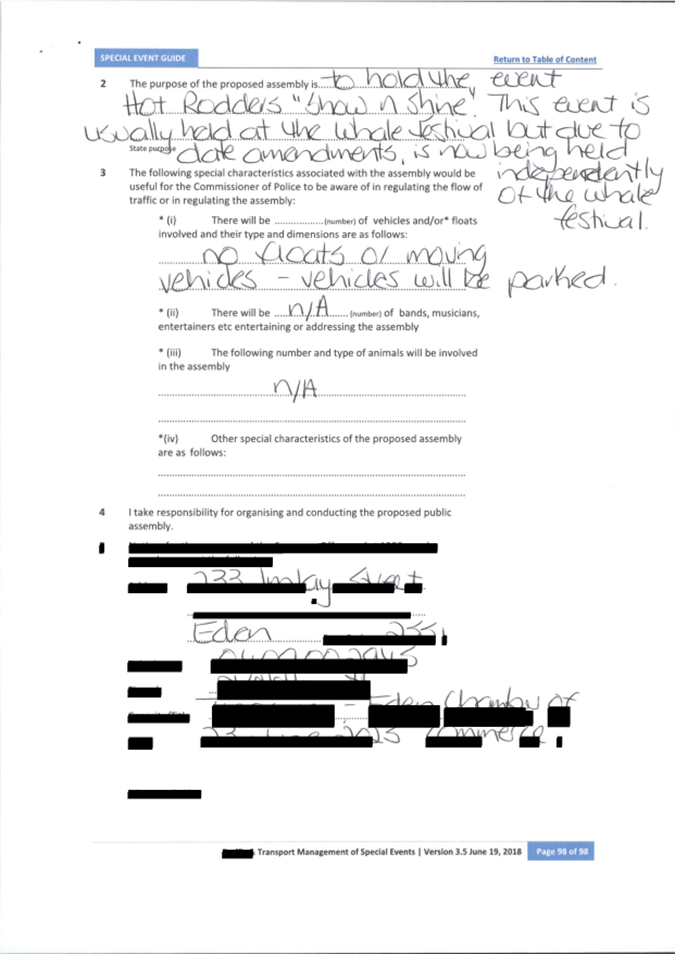


|
Council
|
17 September 2025
|
|
Item 9.1
- Attachment 3
|
Signs and Lines plan for LTC Old Wallagoot Road WALLAGOOT
|
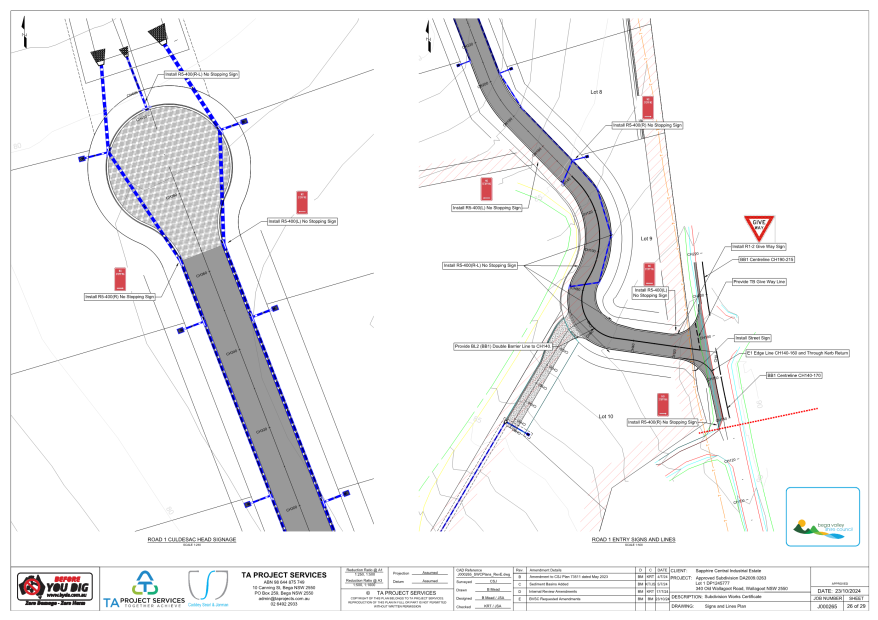
|
Council
|
17 September 2025
|
|
Item 9.1
- Attachment 4
|
Final Recommendations Report_SSA_Pedestrian
Crossing_Bermagui_140825
|


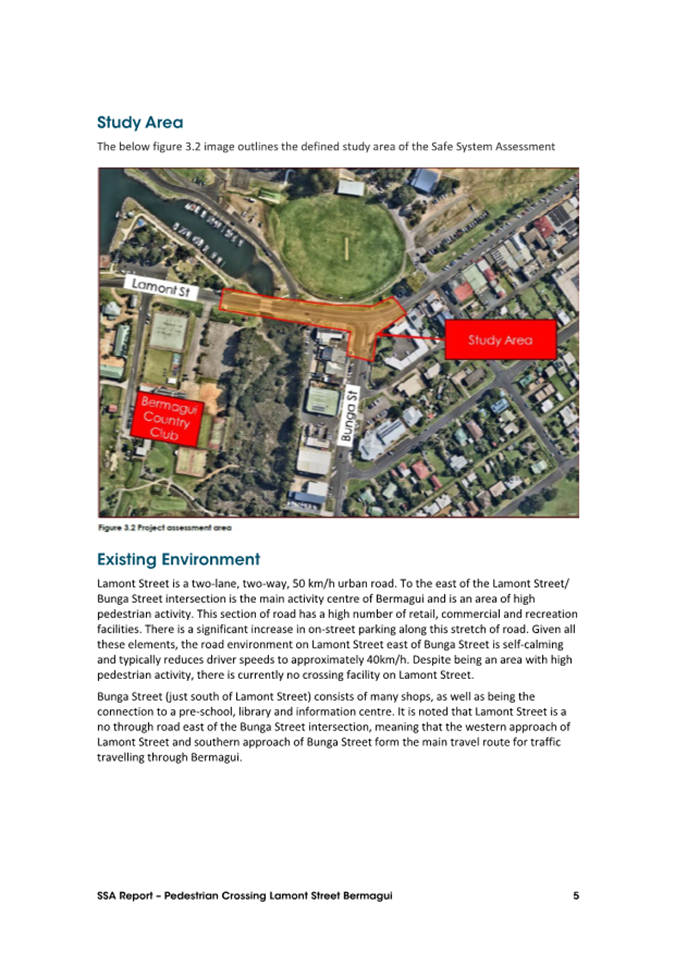
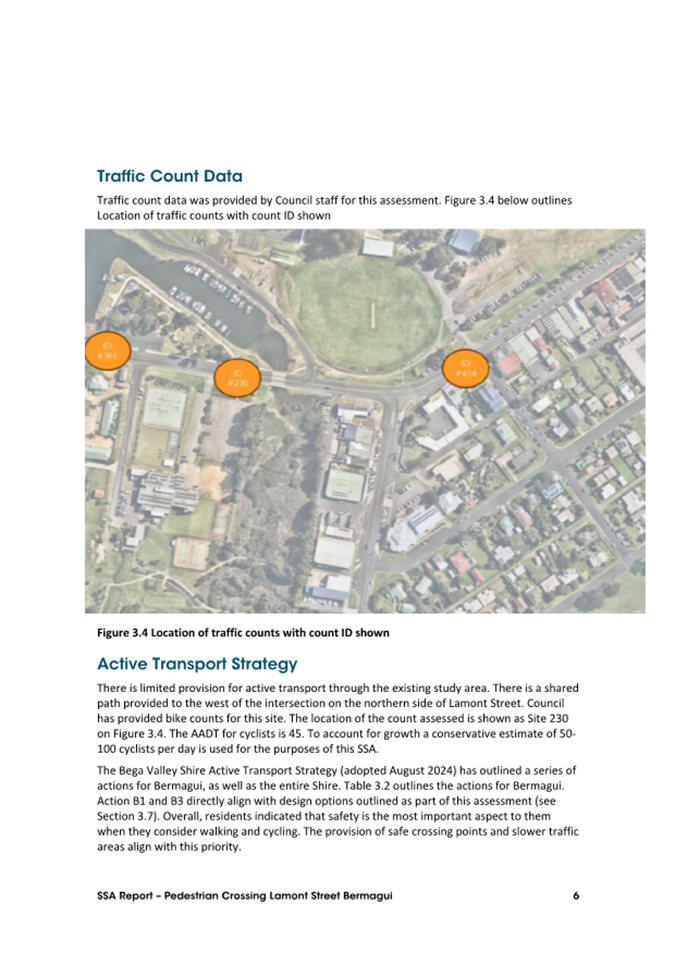


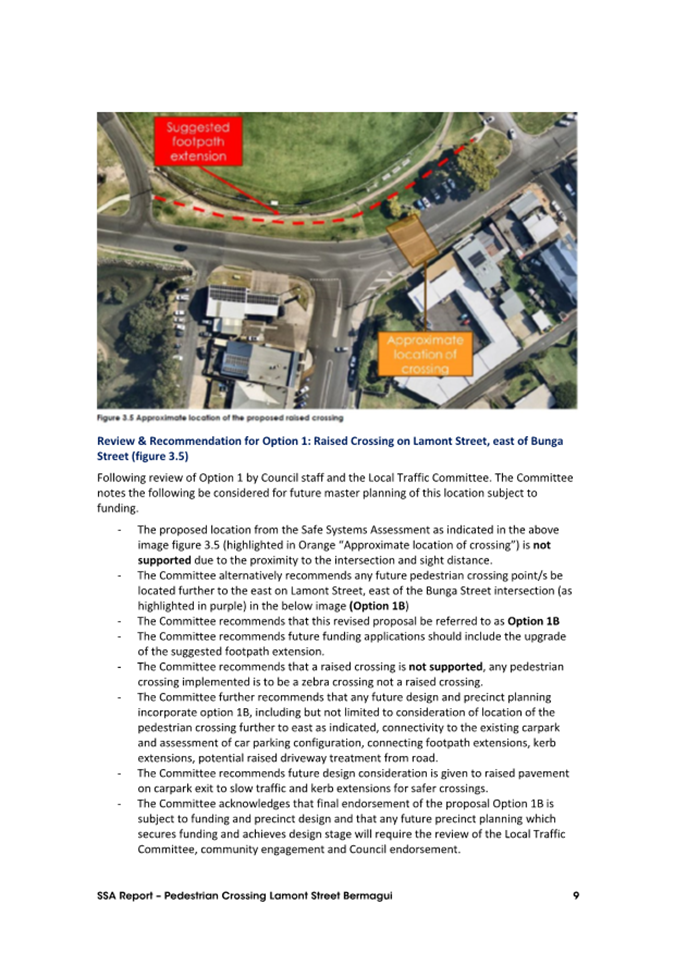




|
Council
|
17 September 2025
|
|
Item 9.1
- Attachment 5
|
A guide for councils using authorisation and delegation
|




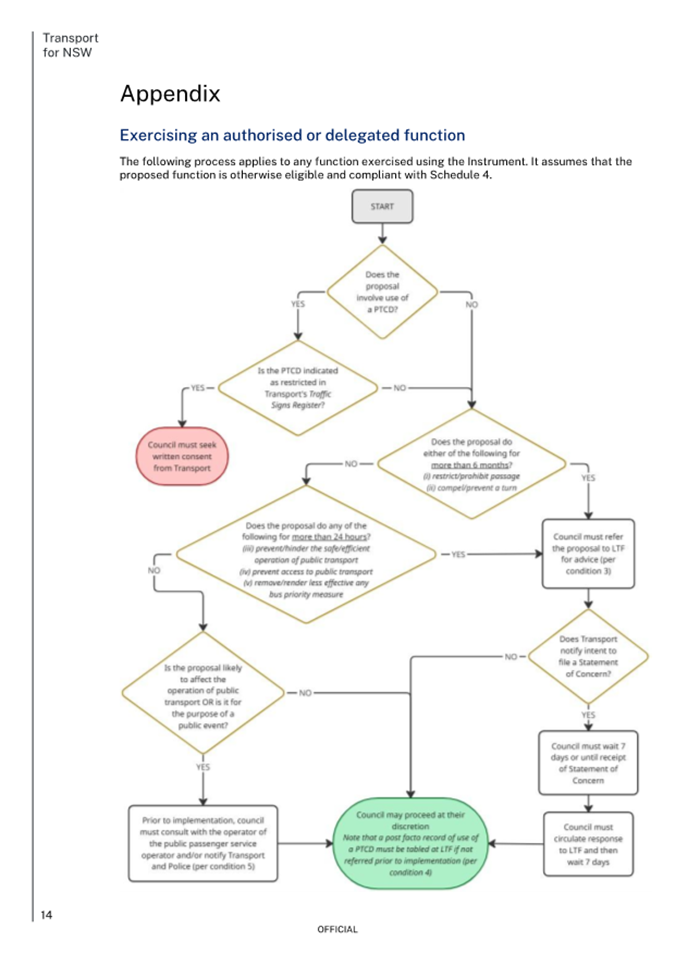


|
Council
|
17 September 2025
|
|
Item 9.1
- Attachment 6
|
Briefing Pack - 2025 Authorisation-Delegation to Councils
|


|
Council
|
17 September 2025
|
|
Item 9.1
- Attachment 7
|
Local-Transport-Forum-(LTF)-Referrals-and-review-fact-sheet-4-July
2025
|

|
Council 17 September 2025
|
Item 9.2
|
9.2. Merimbula
Airport General Aviation Precinct
This report outlines the servicing
of lease sites within the General Aviation precinct at Merimbula Airport and
recommends that Council formalise tenure arrangements by delegating authority
to negotiate and execute 20-year land-only leases and non-exclusive licence
agreements for apron space.
Chief Executive Officer
Officer’s
Recommendation
1. That Council
endorses the water and sewerage arrangements for lease lots within the General
Aviation precinct, as outlined in the report dated 17 September 2025.
2. That Council
approves the construction of an airside-accessible toilet facility to service
users in the General Aviation precinct, connected to water supply and sewerage
infrastructure.
3. That Council
delegates authority to the Chief Executive Officer and Mayor to negotiate and
execute documentation granting 20-year land-only tenure arrangements to
successful Expression of Interest applicants, at a rate of $20.00 plus GST per
square metre per annum for lease sites within the new General Aviation
Precinct, subject to annual CPI increases.
4. That Council
delegates authority to the Chief Executive Officer and Mayor to negotiate and
execute licence documentation granting non-exclusive licence agreements of up
to 20 years to successful Expression of Interest applicants for apron space
adjoining lease sites within the new General Aviation Precinct, at a rate of
$5.00 plus GST per square metre per annum, subject to annual CPI increases.
Executive Summary
This report outlines the proposed tenure arrangements for
lease sites within the new General Aviation (GA) Precinct at Merimbula Airport,
following Council’s resolution on 16 October 2024. It recommends
delegating authority to the Chief Executive Officer and Mayor to negotiate and
execute 20-year land-only leases at annual rates of $20.00 plus GST per square
metre, and non-exclusive licence agreements for apron space at $5.00 plus GST
per square metre, and subject to annual CPI increases. These arrangements are
informed by a series of meetings with Expression of Interest (EOI) applicants,
which provided insights into lessee expectations, infrastructure needs, and
concerns regarding lease terms and site configurations.
Key feedback from lessees included a strong preference for
long-term leases with options to extend, reluctance to transfer hangar
ownership to Council at the end of the lease term, and interest in leasing only
the building footprint with apron access under licence. Infrastructure
requirements varied between potential lessees, with water access seen as
beneficial but not essential, and sewer access requested by only a few
applicants. The need for a shared airside toilet facility was consistently
raised.
In considering this feedback, it is now proposed to provide
water and sewer services to only three lease sites and to provide a shared
accessible toilet to serve the users of the GA precinct.
Background
Council resolved at its Ordinary Meeting of 16 October 2024,
when considering existing and new tenure arrangements at Merimbula Airport as
follows:
8. Endorse in-principle the
allocation of other sites proposed in the new General Aviation precinct.
9. Delegates to the Chief
Executive Officer and Mayor the authority to execute the necessary lease
documentation, granting 20-year land only tenure arrangement to sites 15-20 for
a rate of $20.00 per m2 within the new General Aviation Precinct.
10. Staff advise other EOI
applicants of the recommended sites, the proposed lease costs, oncosts
(including council rates, sewer connection fee etc) to gauge interest in
pursuing a lease with a report to be presented back to council.
11. Further model the
following option (excluding for fuel provider) to be offered to EOI applicants:
a. 20-year land only leases
for a rate of $20.00 per m2 plus GST with an annual CPI increase.
b. Clauses offering a
discounted lease amount for immediate transfer of constructed asset ownership
to council.
c. Tenant to retain
maintenance responsibility of assets during life of lease.
Following the Resolution of Council, a series of meetings
were held with Expression of Interest (EOI) applicants. A record of meetings is
attached for the confidential information of councillors. The discussions
provided valuable insights into lessee expectations, infrastructure needs, and
concerns regarding lease terms and site configurations.
Key themes and feedback are summarised below:
Lease tenure and ownership
· Strong preference
for long-term leases (20–30 years), with several lessees requesting
options to extend.
· Multiple lessees expressed
concern over Council resuming ownership of hangars at the end of the lease
term, preferring to retain ownership or have transfer/sale options.
Infrastructure
requirements
· Access to water
and sewer (lease sites 10, 11 and 20 only).
· Most mentioned
needing toilet facilities and access to a tap either shared or individual.
· Wash-down bays
near fuel facilities were suggested.
Site configuration and access
· Lot dimensions and
hangar door overhangs.
· Vehicular access
and proximity to fuel depots.
· Interest in
leasing only the building footprint with apron access under licence.
Following the meetings, site allocations were revisited to
ensure the needs of applicants were met. An updated site allocation plan is
attached for the confidential information of councillors. A key change from the
original lot layout is aggregating some small hangar sites together to
accommodate sliding hangar doors within individual hangar lease boundaries.
Lots 1A to 9 are now proposed to change to five double-width lots.
Construction and site allocation
· The Heads of Lease
Agreement will include a specified construction sequence for hangars to avoid
access issues while construction takes place.
· Licence areas for
Lots 1A–9 will be shown separately from lease areas on the site plan.
Infrastructure and services
· Council will
complete civil works to level the lease lot at the most northerly end of the GA
precinct, as this work had not been included in the construction works for the
GA precinct.
· Water, sewerage
and drainage pipe works were installed as part of the GA precinct construction
works; however the sewerage system will require installation of pressure sewer
pumps and collection pods before any leased lots can connect.
· Lease lots seeking
connection to the water or sewer network will be subject to standard connection
fees. They will be exempt from Section 64 contributions; however high usage
charges will apply to all water consumption. If connecting to the sewer network,
a Sewer Discharge Factor (SDF) will be assigned to determine usage-based
charges. This is in line with charging arrangements for other commercial
developments.
· Where water
connections are required, the standard water connection application fee is
$1,769 per lot (based on a 20mm service line).
· The existing wet
well servicing the Merimbula Aircraft Maintenance building was provided by that
business to service its needs. This system has been assessed and found to
be inadequate for servicing multiple lots. A system upgrade or replacement may
be required or more likely, the MAM building could connect into a new pressure
sewer pod when installed for the adjoining GA premises.
· Previous planning
for the GA precinct has not included provision for a washdown facility. There
is no aircraft washdown facility at Merimbula Airport now. It is not proposed
to provide a washdown facility as there is no space allocated for this and no
provision made for supply of water and disposal of washdown water. Washdown
water should not be discharged to the stormwater drainage system, where it
could potentially result in polluted water entering environmentally sensitive
wetlands and Merimbula Lake.
Toilet facility proposal
· A
disabled-accessible unisex toilet is proposed to be constructed in the secure
airside area near Lot 10, where it will be screened from view from Arthur Kaine
Drive by the hangar building on lot 10. This facility will service people
using the hangars.
· Hangars leased for
commercial purposes and having employed staff on site should have internal
toilet and kitchen facilities which must be connected to the Council’s
water and sewerage systems provided.
· Indicative costs
for a conventional built accessible toilet facility are estimated at $100,000 -
$120,000., though a modular transportable option is also being considered for
its simplicity, lower cost, and ease of installation. Indicative cost for
a modular toilet block should be less than $50,000 allowing for service
connections.
· The toilet block
will have to be serviced with water, sewerage and electricity, with these costs
borne by Council as the owner of the facility.
· It is proposed
that nil headworks be charged for the toilet facility
· The toilet block
will have to be cleaned regularly. This cleaning will have to be undertaken by
personnel with airside security clearance. It may be possible to vary the
contract with the airport operator to include this cleaning with the airport
operations contract, for some additional ongoing cost.
Lease and licence considerations
· As previously
resolved, Council has accepted the principle of leases for hangars, and where
practicable licence areas adjoining hangar leases.
· This arrangement
provides for exclusive use of the leased sites and provides for non-exclusive
use of licence areas.
· The adopted fees
and charges for aircraft parking at Merimbula airport provides an exemption
from liability for daily aircraft parking charges where the aircraft are parked
within the owner’s licenced areas.
· For lots 12 to 14,
the proposed licence areas have been constructed and sealed with the adjacent
taxiway. This would suit commercial scale operations from the hangars on these
lots.
· For lots 1A to 9,
the area between the hangar lease lots and the edge of the taxiway has not been
sealed, leaving the options for lessees to leave the licence areas as grass, or
to construct a sealed pavement at their own cost if they choose to do so. The
original intent had been that these areas form part of the leases, but feedback
from potential lessees was that they did not want to pay the full lease rate
per square metre for land that they could not build on.
· The proposed
licences will give the lessees of the adjoining lots clear rights to use the
licence area, but without excluding others from crossing the licence areas, for
example for walking across the front of other leases when accessing the shared
toilet.
· The licences will
also include a requirement for the licence holder (lessee of adjoining hangar
lease) to maintain the surface of the licence area in a safe and serviceable
condition.
· The proposed
licences must be linked to the adjoining leases to ensure a consistent approach
is applied across all hangar tenure arrangements within the GA precinct.
· Final details of
lease and licence terms will be negotiated with lessees by the Mayor and CEO as
authorised in the recommendations above.
· It is proposed
that lessees be granted early access to their allocated sites for the purpose
of preparing development application documentation for their hangars, upon
execution of the Head of Agreement for lease and payment of a licence fee.
· Annual rental fees
will become payable upon registration of the plan of subdivision for lease
purposes with NSW Land Registry Services.
· The staging of hangar
construction must be carefully managed, as all construction access must occur
via landside routes. This necessitates access across lots located closer to the
road for the construction of earlier hangars, before that access is obstructed
by subsequent builds. As such, the timing of hangar construction will influence
site allocation decisions.
Planning and certification
· The changes to the
configuration of lease lots 1A to 9 into 5 double width lots and the adjoining
licence areas, together with the proposed shared accessible toilet and leveling
of the northernmost lot site 1A will require a modification of the current development
approval DA2022.386 for the subdivision for lease purposes. This
modification application will have to be assessed by Council’s planners
in the normal manner and may require reporting to Council for
determination.
· The subdivision
survey plan previously commissioned will need to be updated to include
easements for water, sewer, and drainage. It must also reflect lot amalgamation
where multiple lots have been allocated to a single applicant. Lease and
licence areas for Lots 1A–9 will need to be shown separately on the plan.
· The subdivision
certificate application will then have to be re-lodged via the Planning
Portal.
· Once the survey
plan is updated and all necessary approvals are obtained, Council will proceed
with registration through NSW Land Registry Services.

Figure 1: Draft GA Precinct lease plan. Note draft plan
to be updated to include water, sewer, and drainage easements once confirmed.
It must also reflect lot amalgamation where multiple lots have been allocated
to a single applicant. Lease and licence areas for Lots 1A–9 will need to
be shown separately on the plan.
Options
Council may consider the following options in relation to
this report and the treatment of apron space and infrastructure within the new
General Aviation (GA) Precinct:
1. Include
apron space in lease parcels: Council may choose to include the apron space in
front of each lease site as part of the leased parcel and apply a rate of
$20.00 per m². While legally permissible, this approach has been
consistently challenged by lessees, many of whom prefer to lease only the
building footprint.
2. Tenure
and ownership concerns: Several lessees expressed reluctance to build on land
that would revert to Council ownership at the end of the lease. Providing
lessees with 20-year lease terms to address concerns around asset ownership and
transferability is recommended. The normal arrangement for leases for
hangars is for the lessees to be required to remove the hangars at their cost
at the end of the lease term. The negotiated lease conditions could include
provision for Council to permit a hangar building to remain at the end of the
lease, at Council’s discretion, considering the condition of the building
at that time, willingness of a new lessee to take over the existing structure
under similar terms and other relevant operational matters.
3. Address
water access needs: While not essential for all applicants, many lessees
indicated that water access would be beneficial. Council may consider providing
water connections to each lot, or a shared water access point on the toilet
facility.
4. Assess
sewer requirements: Sewer access was requested by only three lessees. Council
may consider limiting sewer infrastructure to specific sites where demand is
confirmed,
5. Water
and sewerage headworks contributions could be levied for each lease lot at the
full rates applicable for subdivisions (Sewer - $16,124 (full Equivalent
Tenement) and water - $11,519 (full Equivalent Tenement)) or levied only on
lots connected to these services. Alternatively, Council’s policy
provides for commercial developments to be levied a higher usage charge for
water and sewerage services in lieu of up-front payment of headworks
contributions. This approach will provide a fairer outcome for the
expected level of usage of these services on these lots for hangars. Lots
connected to water and sewer services will be levied standard availability
charges.
6. Construct
a shared airside toilet facility: Multiple lessees emphasised the need for an
airside toilet facility. Constructing a shared facility to reduce
infrastructure duplication, support airside operations and address lessee
concerns about essential amenities in recommended.
Community
and Stakeholder Engagement
Engagement undertaken
As outlined under the background section of this report a
series of meetings were held with EOI applicants. A record of meetings is
attached for the information of councillors summarising the lessee
expectations, infrastructure needs, and concerns regarding lease terms and site
configurations.
Engagement planned
Ongoing engagement will be undertaken with EOI applicants,
specialist aviation consultants L&R Airport Consulting, the registered
surveyor, Council’s planning staff, and legal representatives following
the outcomes of this report.
Financial
and Resource Considerations
The total estimated cost to Council is $100,000 including
infrastructure and planning costs. It is recommended these costs be funded form
a portion of this years capital allocation to parking improvements at the
airport.
Lease arrangements
· Council resolved
to offer 20-year land-only leases at a rate of $20.00 per m² per annum
(plus GST and annual CPI increases).
· As outlined in the
attached report from the Council meeting on 16 October 2024, Council
commissioned a commercial market rental assessment from Opteon Valuers in
September 2022. This assessment forms the basis for the $20.00 per m² rate
applied to lease sites and the $5.00 per m² rate applied to licence areas
within the new GA Precinct as agreed at the Council meeting on 20 March 2024.
· The licence fee
under the Agreement for Lease is $2,000 and is a non-exclusive licence to
access the premises to carry out investigations and surveys of the premises for
the purposes of the lessee’s development application.
· Lease fees will be
payable upon registration of the lease plan at NSW Land Registry Services.
· Legal costs will
apply for finalising lease documentation and registering each lease with NSW
Land Registry Services.
Infrastructure costs
· Properties seeking
connection to the water or sewer network will be subject to standard connection
fees. They will be exempt from Section 64 contributions; however high usage
charges will apply to all water consumption. If connecting to the sewer network,
a Sewer Discharge Factor (SDF) will be assigned to determine usage-based
charges.
· Standard water
connection application fee: $1,769 per lot (based on a 20m line).
· Headworks charges:
Sewer - $16,124 (full Equivalent Tenement) and water - $11,519 (full Equivalent
Tenement).
· SDF will be
applied to determine usage-based charges for connected properties.
· The existing wet
well servicing the Merimbula Aircraft Maintenance building has been assessed
and found to be inadequate for servicing multiple lots. A system upgrade or
replacement may be required.
· Council will bear
the costs of installing required pump stations (pressure sewer pods) as part of
the capital costs of the GA precinct development. The proposed servicing
of lots 10, 11, 20, the toilet block and the existing MAM hangar will require
installation of two pods at an indicative cost of $15,000 each including
electrical connections.
Toilet facility proposal
· Estimated
construction cost is $50,000 for a modular solution.
· No headworks
charges will apply; however, Council will incur high consumption charges for
usage.
Planning and certification costs:
· Survey plan
updates (easements, amalgamations, lease/licence delineations).
· Development
Application modification (DA2022.386).
· Subdivision
certificate re-lodgement via the Planning Portal.
· Registration with
NSW Land Registry Services.
Legal
/Policy
A lease enables exclusive use over land for a specified term
and purpose and is considered the best form of agreement if longer-term
security of tenure is an important factor to the user of the land, such as
where commercial uses are proposed, and major financial outlay is required.
Section 53 of the Real Property Act 1900 (NSW) (RP
Act) provides that land leased for more than three years must be in the
approved form and section 42(1)(d) of the RP Act and the
Registrar-General’s Guidelines requires a lease for a term exceeding
three years to be registered on title.
The Registrar-General’s Guidelines require lease sites
to be defined in a deposited plan if total term is of more than five years. For
this reason, Council is required to subdivide the site for lease purposes and a
development application has been granted for this purpose and subdivision
certificate application has been lodged and is currently under assessment. Once
issued the plan of subdivision for lease purposes will be lodged at NSW Land
Registry Services.
Impacts
on Strategic/Operational/Asset Management Plan/Risk
Strategic
Alignment
Council’s Delivery Program 2025–2029 identifies
the management and operation of Merimbula Airport, which supports the movement
of people and goods and contributes to social, economic, and environmental
outcomes for the shire as a core operational responsibility.
Additionally, the Merimbula Airport Masterplan 2043 is
listed as a key guiding document in Council’s Delivery Program
2025–2029.
Environment
and Climate Change
The new GA precinct has been designed and constructed with
future sea level rise and flood modelling predictions in mind, unlike the
existing lease sites, which did not account for these factors when originally
constructed.
Economic
Merimbula Airport plays a vital role in the local economy,
significantly contributing through tourism, recreational use, and business
activities. Ensuring a well-functioning and sustainable airport at Merimbula is
crucial for supporting the broader Bega Valley economy. Besides the substantial
inbound traffic, the airport also handles considerable outbound
business-related use.
Council has invested a lot of effort and money into the GA
precinct works to date. The resolution of the servicing and lease/licence
arrangements is essential before lessees can progress towards building hangars
and related businesses, growing the utilisation of the airport, and realising
the economic benefits from the GA precinct project.
Risk
There are significant financial and non-financial risks
associated with this report, both in terms of the decisions Council makes and
the implementation of resolutions. The Independent Commission Against
Corruption (ICAC) provides guidance on ‘Direct Negotiations: Guidelines
for Managing Risk’. As Council continues to navigate the process of
resolving tenure arrangements, it is crucial to comply with relevant
legislation and guidance to avoid any impropriety. This includes adhering to
approved delegations from Council when undertaking negotiations and
interactions with existing and potential tenants.
Council is also responsible both as the aerodrome owner and
as the Aerodrome Certificate Holder to ensure the safe operation of the
aerodrome and compliance with aviation legislation and must ensure that lease
arrangements facilitate meeting this responsibility.
There is a risk that if the matters canvassed in this report
are not addressed, the GA precinct project will not achieve the benefits that
justified Council in undertaking this development.
Social
/ Cultural
Merimbula Airport is vital to the
Bega Valley from both social and cultural perspectives. It currently supports
recreational use, which is expected to grow with the increased occupancy of the
new GA precinct, as well as flight training. Additionally, the airport is
crucial for our community, providing aeromedical services, disaster response,
and facilitating education and health-related travel.
Attachments
1⇩. Council
report dated 16 October 2024 - Merimbula Airport tenure arrangements
2. Consultation
Following Expression of Interest Submissions (Confidential - As this
attachment contains commercial information of a confidential nature that would,
if disclosed (i) prejudice the commercial position of the person who supplied
it; or (ii) confer a commercial advantage on a competitor of the Council; or
(iii) reveal a trade secret as per Section 10A(2)(d) of the Local Government
Act 1993.
Although the above relates more explicitly to the discussion
of closed business, it also forms part of the basis of justification as to why
information relied upon in informing the public decisions made by Council are
kept confidential. To consider this confidential material in open Council would
be, on balance, contrary to the public interest (as defined in Section 14 of
Government Information Public Access (GIPA) Act 2009). This meets the
requirements of Sect 10 D of the Local Government Act 1993 if
Council were to close the meeting to discuss the details.
3. Merimbula
Airport general aviation precinct site allocation plan (Confidential -
As this attachment contains commercial information of a confidential nature
that would, if disclosed (i) prejudice the commercial position of the person
who supplied it; or (ii) confer a commercial advantage on a competitor of the
Council; or (iii) reveal a trade secret as per Section 10A(2)(d) of the Local
Government Act 1993.
Although the above relates more explicitly to the discussion
of closed business, it also forms part of the basis of justification as to why
information relied upon in informing the public decisions made by Council are
kept confidential. To consider this confidential material in open Council would
be, on balance, contrary to the public interest (as defined in Section 14 of
Government Information Public Access (GIPA) Act 2009). This meets the
requirements of Sect 10 D of the Local Government Act 1993 if
Council were to close the meeting to discuss the details.
|
Council
|
17 September 2025
|
|
Item 9.2
- Attachment 1
|
Council report dated 16 October 2024 - Merimbula Airport
tenure arrangements
|


|
Council 17 September 2025
|
Item 9.3
|
9.3. Reporting of
minutes- Section 355 General Sportsground Advisory Committee meeting 26 May
2025
This report provides the previously adopted minutes for the
Section 355 General Sportsground Committee meeting held on 26 May 2025.
Director Infrastructure
Officer’s
Recommendation
That Council receive and note the
report and attached minutes of the Section 355 General Sportsground Advisory
Committee meeting held on 26 May 2025.
Executive Summary
This report provides the minutes from the 26 May 2025
meeting of the Section 355 General Sportsground
Advisory Committee for information only. Due to the meetings being held
quarterly the minutes are confirmed three months in arrears and reported at the
next available Council meeting. The minutes of the 26 May meeting were endorsed
at the meeting held on 25 August 2025.
Background
Committees of Council are established each term of Council
and disbanded at the end of each Council term. On 9 October 2024 Council
established various committees, groups, and panels, following the Mayoral
Election. The appointment of volunteer representatives to community
sportsground committees including Section 355 General Sportsground Advisory
Committee were included in the 18 December 2024 and 21 May Council reports.
Committees of Council provide a mechanism for community
involvement in the provision of Council facilities or services. There are three
types of committee that may be established by a council: Committees of Council,
which are comprised entirely of Councillors; Section 355 Committees, which are
delegated under Section 355 of the Local Government Act 1993 to
undertake certain functions of Council and may include community
representatives, Councillors and/or members of Council staff; and Advisory
Committees, which may be made up of community representatives, Councillors
and/or members of Council staff, and provide advice to Council on relevant
matters.
Each committee has guidelines that detail its roles and
responsibilities, and where relevant, its delegated functions. All committees
are obliged to observe Council’s adopted Code of Meeting Practice.
The committees, through Council officers, must make their
agenda and minutes public, and report meeting minutes to Council periodically
once adopted by the relevant committee. Agendas and minutes are published on
Council’s website.
Relevant recommendations of Advisory Committees are reported
to Council meetings, through Council officers, for consideration.
The current BVSC
sportsgrounds management structure was established in 2016. The intention of
the Section 355 General Sportsground Advisory Committee is to consider matters
that relate to sporting facilities management in a Shire wide context. Roles
and responsibilities include:
· Making
recommendations to Council on any aspect of sportsground management and/or
sportsground operations
· Making
recommendations to Council on appropriate fees and charges structures for
sportsgrounds
· Advising Council
of the membership of individual sportsground community committees
· Recommend
financial allocations for individual sportsgrounds from Council funds and/or
funds from other sources
· Establishment of
working groups or special task groups where required and report back to the
committee.
Options
That Council receive and note the report and attached
minutes of the Section 355 General Sportsground Advisory Committee meeting held
on 26 May 2025.
Community
and Stakeholder Engagement
Engagement undertaken
Nominations for Council’s
committees were sought in line with Council’s adopted Community
Engagement Strategy and Community Engagement Toolkit. The
opportunity to participate in the committees was advertised via local
newspapers, Council’s website, Council News and Facebook page.
Engagement planned
The Section 355 General
Sportsground Advisory Committee will be advised that the meeting minutes have
been reported and noted by Council.
There are no further engagement
requirements associated with the recommendation of this report. Should any of
the committees need to recruit additional members to fill vacancies, these will
be advertised in accordance with the requirements of Council’s Community
Engagement Strategy and reported to Council when filled.
Financial
and Resource Considerations
There are no financial or resource
considerations associated with the recommendation of this report.
Council officer time is required to
provide support to the committees as per committee guidelines which is part of
the annual activities of Council.
Legal
/Policy
The Local Government Act 1993 provides for the
establishment of advisory committees to support Council decision-making.
Impacts
on Strategic/Operational/Asset Management Plan/Risk
Strategic
Alignment
Community representation on Council’s advisory
committees supports the following elements of the Bega Valley Community Strategic Plan 2042:
6. Strong,
Consultative Leadership
6.11
We are an informed and engaged community with a
transparent, consultative and responsive Council
6.11.1
Improve communication about Council activities, decisions and
achievements
The following task is identified in the Core Business
section within the Parks Aquatics and Recreation section of the Delivery
Program 2022-25 + Operational Plan 2023-24:
Coordinate with community
groups, committees, and volunteers to oversee the management and maintenance of
community sporting and recreation facilities
Environment
and Climate Change
There are no direct environment or climate change
implications associated with the recommendation of this report.
Economic
Volunteer committees play an integral part in the management
sporting facilities that would otherwise fall to Council. In this respect there
is a positive economic dividend by supporting this activity.
Risk
The establishment and operation of committees of Council are
part of the regular business of Council. The recommendation of this report does
not introduce any new risks to Council.
Social
/ Cultural
Council committees seek to provide a mechanism for
interested community members to play an active role in management and
administration of Council facilities used by the community. Committees of
Council are an instrument for facilitating open and transparent discussion
about decisions made by Council.
Attachments
1⇩. S355
General Sportsground Quarterly Committee Meeting minutes 26 May 2025
|
Council
|
17 September 2025
|
|
Item 9.3
- Attachment 1
|
S355 General Sportsground Quarterly Committee Meeting minutes
26 May 2025
|

|
Council
|
17 September 2025
|
Staff Reports -
Executive
17 September 2025
11.1 Council
Meeting Dates January 2026 - December 2026................................... 182
11.2 Local
Government NSW (LGNSW) Conference 2025 Motions.......................... 185
11.3 Actions
from resolutions of Council - Progress Report..................................... 234
|
Council 17 September 2025
|
Item 11.1
|
11.1. Council Meeting Dates January 2026 - December 2026
Under Section 9 of the Local
Government Act, the Council is required to publicise when it will hold its
meetings.
Chief Executive Officer
Officer’s
Recommendation
1. That
Councillors adopt the meeting dates for 2026 as noted below with meetings to be
held at 2:00pm:
|
Wednesday,
28 January 2026
|
Ordinary
|
|
Wednesday,
25 February 2026
|
Ordinary
|
|
Wednesday,
25 March 2026
|
Ordinary
|
|
Wednesday,
22 April 2026
|
Ordinary
|
|
Wednesday,
6 May 2026
|
Ordinary
|
|
Wednesday,
27 May 2026
|
Ordinary
|
|
Wednesday,
10 June 2026
|
Ordinary
|
|
Wednesday,
24 June 2026
|
Ordinary
|
|
Wednesday,
15 July 2026
|
Ordinary
|
|
Wednesday,
19 August 2026
|
Ordinary
|
|
Wednesday,
23 September 2026
|
Ordinary
|
|
Wednesday,
21 October 2026
|
Ordinary
|
|
Wednesday,
18 November 2026
|
Ordinary
|
|
Wednesday,
16 December 2026
|
Ordinary
|
Executive Summary
Council is required to hold at least ten meetings per year
under the Local Government Act (1993). The proposed dates outlined would
allow for fourteen meetings in 2026.
Background
In recent
years Council has resolved to hold Council meetings at 2:00pm on Wednesdays
with the schedule varying between three weekly to four weekly, most recently
being four weekly.
The
schedule proposed in this report is aimed to balance resources in preparing for
Council meetings as well as ensuring they are adequately spaced to ensure
timely decision making by Council.
It
typically involves four weekly meetings in 2026 additional meeting included to
accommodate isolated consideration of integrated planning and reporting
documents.
Options
The
proposed meeting dates for the 2026 are:
|
Wednesday,
28 January 2026
|
Ordinary
|
|
Wednesday,
25 February 2026
|
Ordinary
|
|
Wednesday,
25 March 2026
|
Ordinary
|
|
Wednesday,
22 April 2026
|
Ordinary
|
|
Wednesday,
6 May 2026
|
Ordinary
|
|
Wednesday,
27 May 2026
|
Ordinary
|
|
Wednesday,
10 June 2026
|
Ordinary
|
|
Wednesday,
24 June 2026
|
Ordinary
|
|
Wednesday,
15 July 2026
|
Ordinary
|
|
Wednesday,
19 August 2026
|
Ordinary
|
|
Wednesday,
23 September 2026
|
Ordinary
|
|
Wednesday,
21 October 2026
|
Ordinary
|
|
Wednesday,
18 November 2026
|
Ordinary
|
|
Wednesday,
16 December 2026
|
Ordinary
|
Council has the ability to amend this schedule provided the
minimum number of ten meetings in the year are held. Council can also change
the schedule by resolution of Council.
Community
and Stakeholder Engagement
Engagement undertaken
Internal engagement has been undertaken in drafting the
schedule outlined in this report. Council officers are recommending these
meeting dates to meet the reporting and decision-making needs of the
organisation.
Engagement planned
No further engagement is planned.
Financial
and Resource Considerations
There are no direct costs associated with the
recommendations in this report. The cost of Council meetings are included in
the budget allocation for elected officials.
Legal
/Policy
Local Government Act 1993 (NSW)
Local Government (General) Regulations
Impacts
on Strategic/Operational/Asset Management Plan/Risk
Strategic
Alignment
CSP Theme:
Our civic leadership - We are an informed and engaged community with
transparent, consultative and responsive Government services.
CSP
Strategy: E.1 Lead, govern and regulate in an ethical, equitable, transparent
and accountable way
Environment
and Climate Change
There are no direct Environment and Climate Change impacts
associated with the recommendations of this report.
Economic
There are no economic impacts
associated with this report.
Risk
There are no significant risks associated with presenting
this report.
Social
/ Cultural
There are no direct social or cultural implications
associated with presenting this report.
Attachments
Nil
|
Council 17 September 2025
|
Item 11.2
|
11.2. Local Government NSW (LGNSW) Conference 2025 Motions
This
report recommendations a range of motions for Council to submit for the 2025
Local Government NSW (LGNSW) Annual Conference.
Chief Executive Officer
Officer’s Recommendation
That Council
1. Endorse
the following Motions being submitted to LGNSW for consideration for inclusion
onto the Agenda for the Annual Conference, to be uploaded by 12 midnight (AEST)
on Tuesday 30 September 2025 to the LGNSW website:
a. Clarity
in definition for moveable dwelling/tiny home regulation
b. Equitable arts and culture funding for regional
council operated services (e.g., Galleries)
c. Expanding temporary housing flexibility in
response to the housing crisis
d. Trainee, apprentice and cadet funding and Local
Government as an employer of choice
e. Reinstatement Business Connect program
Executive Summary
Council is a member of LGNSW,
the peak Local Government body in NSW. The
Annual Conference is the pre-eminent policy making event for the local
government sector in NSW. It is a key event for local government where
Councillors come together to share ideas and debate issues that shape the way
the sector functions and is governed.
Mayor Fitzpatrick, Councillors
Daly, Haggar and Porter will be attending the 2025 LGNSW Annual Conference in
Sydney from Sunday 23 November to Tuesday 25 November 2025 as resolved at the
July 2025 Council meeting.
Each year, member Councils
across NSW submit a range of motions to the Annual Conference https://lgnswconference.org.au/. These motions relate to strategic local government
issues which affect members state-wide and introduce new or emerging policy
issues and actions. They are debated and resolved by Conference delegates, with
successful resolutions guiding LGNSW’s advocacy priorities for the year
ahead. The current LGNSW Policy Platform – April 2025 is included as an
attachment to this report.
Background
Criteria
for motion submission
The LGNSW Board has resolved and
advised Council that motions will be included in the Business Paper for the
Conference only where they:
1. Be consistent with the objects of
the LGNSW Rules (Rule 4)
2. Demonstrate that the issue concerns
or is likely to concern a substantial number of local governments in NSW
3. Seek to establish or change a policy
position of LGNSW and/or improve governance of the association (noting that the
LGNSW Board is responsible for any decisions around resourcing and campaigns or
operational activities, and any necessary resource allocations will be subject
to the LGNSW budgetary process)
4. Be strategic
5. Be concise, clearly worded and
unambiguous
6. Not be focussed on just a small
specific part of NSW
7. Not encourage violation of
prevailing laws
8. Not seek to advantage one or several
members at the expense of other members
Motions of a similar objective:
9. May be consolidated by LGNSW as a
single item
Motions reflecting existing
LGNSW policy
10. Remain part of LGNSW’s Policy Platform
but will not be included for debate as they have already been considered by
Conference.
Motions adopted at Conferences
inform LGNSW’s advocacy actions on behalf of the local government sector.
LGNSW includes the exact wording of motions when writing to Ministers,
departments and agencies post-conference, so it is important that the wording
of motions clearly outlines your council’s policy intent or objective.
The format of motions, as much
as possible, should call on a specific body (e.g. LGNSW, state government,
federal government, a specific department or minister) and have a specific
outcome that the motion is aiming to achieve. The wording should be unambiguous.
Motions must also be accompanied
by evidence, for example an extract from Council Minutes that Council has
resolved to submit the motion to the LGNSW Conference. The latest date motions
can be submitted for inclusion in the conference business paper is Tuesday 30
September 2025.
Full details on the submission
of motions can be found at: Motions | Local Government NSW | Annual Conference
(lgnswconference.org.au)
Draft Motions
|
Indicative category of the
motion:
|
Planning, housing and building regulation policy
|
|
Motion Title
|
Clarity in definition for moveable dwelling/tiny home
regulation
|
|
Motion Wording
|
That LGNSW calls on the NSW Government to urgently:
1. Announce and
implement essential reforms to clarify the status of tiny homes and other
portable dwellings.
|
|
Background note:
|
The current NSW planning framework doesn’t recognise
‘tiny homes’, resulting in a range of products marketed and sold
as tiny homes or caravans that do not comply with existing regulations.
Unless a product is a caravan, manufactured home or building it cannot be
approved for a dwelling under state legislation.
There is significant confusion
in communities across NSW regarding what constitutes a caravan under the
legislation and the conditions under which a ‘tiny home’ or
caravan require approval.
Councils are also required to
enforce state government legislation to ensure safe housing for people and
the environment. This places local councils in an unenviable position in
seeking to follow rules set by the state government.
The state government publicly
stating that ‘councils can approve tiny homes’ is completely
underselling the issue, selling out councils, and is nothing more than
political buck passing. The lack
of action on this issue from the state is contributing to growing discord
between the community and local councils.
The state
government must urgently complete its review of the relevant legislation and
update it to account for modern construction methods and current needs.
Councils, and the community, need clarity on acceptable standards for
non-traditional housing types such as ‘tiny homes’.
During a housing
crisis where people are seeking different housing options, communities across
NSW need clearer guidance, and the NSW Government needs to take
responsibility for the angst and frustration being felt across NSW.
|
|
Indicative category of the
motion:
|
Social and community policy
|
|
Motion Title
|
Equitable arts and culture
funding for regional council operated services (e.g., Galleries)
|
|
Motion Wording
|
That LGNSW:
1. Advocate to
ensure councils receive a fair share of funding from state government arts
and culture programs, including consideration of a model similar to library
funding (e.g., committed base-level funding for small to medium cultural
organisations).
2. Recognise the
particular challenges faced by regional councils and prioritise their access
to future arts and cultural funding relative to the larger State Cultural
Institutions.
3. Continue to
highlight cost-shifting as a key advocacy issue, noting that recent Create
NSW funding decisions have increased financial pressure on many local
councils.
|
|
Background note:
|
As part of the NSW Government’s Arts, Culture and Creative
Industries Policy (Creative Communities) 2024–2033, reforms to the Arts
and Cultural Funding Program (ACFP) were announced in June 2024. The reforms
reduced and consolidated the number of funding programs and introduced
changes to the application process.
In Council’s 2024 motion submission, concern was raised that
consolidating programs and increasing competition would disadvantage council
operated cultural services, such as regional galleries. These concerns have
proven valid. Of the 37 council-run galleries across NSW, fewer than half
received funding in the most recent Create NSW multi-year funding rounds.
Only 5 secured 4-year funding, while 12 were awarded 2-year funding and
mostly at reduced levels compared with previous years. Many galleries,
including regional institutions like the South East Centre for Contemporary
Art (SECCA), Glasshouse Port Macquarie, Broken Hill City Art Gallery,
Goulburn Regional Art Gallery (GRAG) and Grafton Regional Gallery (GRG)
amongst many others, missed out on funding they had previously relied
upon.
While Local Government is the largest investor in small-to-medium public
galleries in Australia, Council operated galleries often also depend on
annual or multi-year state funding to sustain their programming, and the
current arrangements risk undermining the viability of these vital cultural
services.
|
|
Indicative category of the motion:
|
Social and community policy
|
|
Motion Title
|
Expanding temporary housing flexibility in response to the
housing crisis
|
|
Motion Wording
|
That LGNSW call on the NSW Government to extend the
exemptions under the Local Government Act for people impacted by a natural
disaster to people impacted by the housing crisis.
|
|
Background note:
|
NSW is facing an escalating housing crisis. With the cost
of living and development continuing to rise, thousands of people are being
pushed into housing insecurity or homelessness. In this context, there is an
urgent need for more flexible, low-barrier housing options, particularly
for those in need of crisis or transitional accommodation.
Under the Local Government Act 1993 and
associated regulations, exemptions currently allow individuals affected by
a declared natural disaster to place a moveable
dwelling—such as a caravan or manufactured home—on their own
land, or on another person’s land with consent, for up to two
years without council approval. Councils may extend this timeframe through
a local approvals policy if the person remains displaced.
The legislation also permits caravan parks and
camping grounds to provide temporary accommodation for up to two years
for people who have lost their homes due to a natural disaster or the
COVID-19 pandemic.
This motion calls on the NSW Government to extend
these same exemptions to people who are displaced or at risk of
homelessness due to the housing crisis. Doing so would:
· provide
immediate, safe shelter for vulnerable individuals and families
· reduce
pressure on emergency housing services
· empower
councils and communities to respond more flexibly and compassionately to
local housing needs.
|
|
Indicative category of the motion:
|
Workplace relations and employment policy
|
|
Motion Title
|
Trainee, apprentice and cadet funding and Local Government
as an employer of choice
|
|
Motion Wording
|
That LGNSW and call on the NSW Government to:
1) Increase
and continue the successful Fresh Start for Local Government Apprentices,
Trainees and Cadets Program
2) Develop
funded school engagement programs to bolster students’ interest in a
career in the local government sector and the diversity of opportunities that
are available.
|
|
Background note:
|
The NSW Government launched the Fresh Start for Local
Government Apprentices, Trainees and Cadets Program in October 2024 and
provides funding support to help bolster the local government workforce.
It’s a highly valued program and one that should be sustained beyond
the current timeframe. Grant funding of this nature helps for a short period
of time however it doesn’t address the resourcing challenges that
Councils will continue to face once the funding program concludes.
This motion also seeks support and investment in a school
engagement program to encourage students to consider a career in local
government. At a local level many Councils would be engaging with schools
however a coordinated statewide program that is resourced and consistent
would help with the pipeline of prospective employees who see their local
council as a great employment opportunity.
NSW councils face increasing challenges in attracting and
retaining skilled staff, particularly in regional and remote areas. Becoming
an employer of choice is critical to ensuring councils can deliver
high-quality services and meet community expectations. While many councils
are already investing in workforce planning and employee engagement,
additional support from the NSW Government is needed to scale these efforts
and ensure consistency across the sector.
|
|
Indicative category of the motion:
|
Social and community policy
|
|
Motion Title
|
Reinstatement Business Connect program
|
|
Motion Wording
|
That LGNSW call on the NSW Government to:
1. Reinstate
the Business Connect program provided by the Service NSW Business Bureau
|
|
Background note:
|
The Business Connect program, delivered through Service
NSW, has been a cornerstone of small business support across the state since
its inception in 2017. It has provided free, independent, and tailored
business advice to small businesses and aspiring entrepreneurs, offering up
to eight hours of expert guidance per financial year. Services included
one-on-one advisory sessions, workshops, and access to digital resources on
topics such as business planning, marketing, financial management, and
resilience training.
The program was wound up on 30 September 2025.
The program has been delivered by a network of qualified,
independent advisors with real-world business experience, and has been
accessible statewide, including in regional and rural communities. It has
been especially valuable for early-stage entrepreneurs and disadvantaged
groups, including women-led businesses, who often lack the resources to pay
for professional advice.
While Service NSW offers a Business Concierge service, it
lacks the depth and tailored expertise of Business Connect. Entrepreneurs are
now left to self-navigate complex challenges without structured support.
The Business Connect program was a vital support mechanism
for small businesses across NSW. Its discontinuation risks leaving thousands
of entrepreneurs without access to essential advice and mentorship.
Reinstating the program would not only safeguard existing businesses but also
foster new enterprise, innovation, and regional economic development.
|
Options
Council may resolve to amend or remove the draft motions.
Council may also resolve to add additional motions.
Community
and Stakeholder Engagement
Engagement undertaken
Internal engagement has been undertaken in development of
the motions recommended by Council officers. Council continues to advocate on
various matters impacting our community and contributions to advocacy forums
like the Local Government NSW Annual Conference provide an opportunity to
ensure our voice is heard at a state level.
Engagement planned
Council will continue to engage with the community to
develop our advocacy priorities. The community can contribute to and support
our advocacy efforts with more information available on our website https://begavalley.nsw.gov.au/council/advocacy
Financial
and Resource Considerations
There are no direct financial or resource considerations.
The draft motions are compiled by staff and presented to Councillors for their
consideration.
Legal
/Policy
There are no legal or policy implications associated with
this report. Should the motions Council has proposed be supported by LGNSW and
changes made by the State Government there could be future legal and policy
implications.
Impacts
on Strategic/Operational/Asset Management Plan/Risk
Strategic
Alignment
Councils’ participation at the LGNSW Conference
through the submission of motions ensures that legislative, policy and funding
matters that impact our community and Council service delivery are raised with
LGNSW and the NSW Government.
Environment
and Climate Change
There are no environment and climate change implications
associated with this report other than those outlined in respective motions.
Economic
There are no economic implications associated with this
report other than those outlined within respective motions.
Risk
There are no risks associated with this report other than
the potential missed opportunity to influence change across the local
government sector.
Social
/ Cultural
There are no social/cultural
issues pertaining to this report other than as outlined within respective
motions.
Attachments
1⇩. 2025.09.17
Attachment - LGNSW Policy Platform 2025
|
Council
|
17 September 2025
|
|
Item 11.2 - Attachment 1
|
2025.09.17 Attachment - LGNSW Policy Platform 2025
|






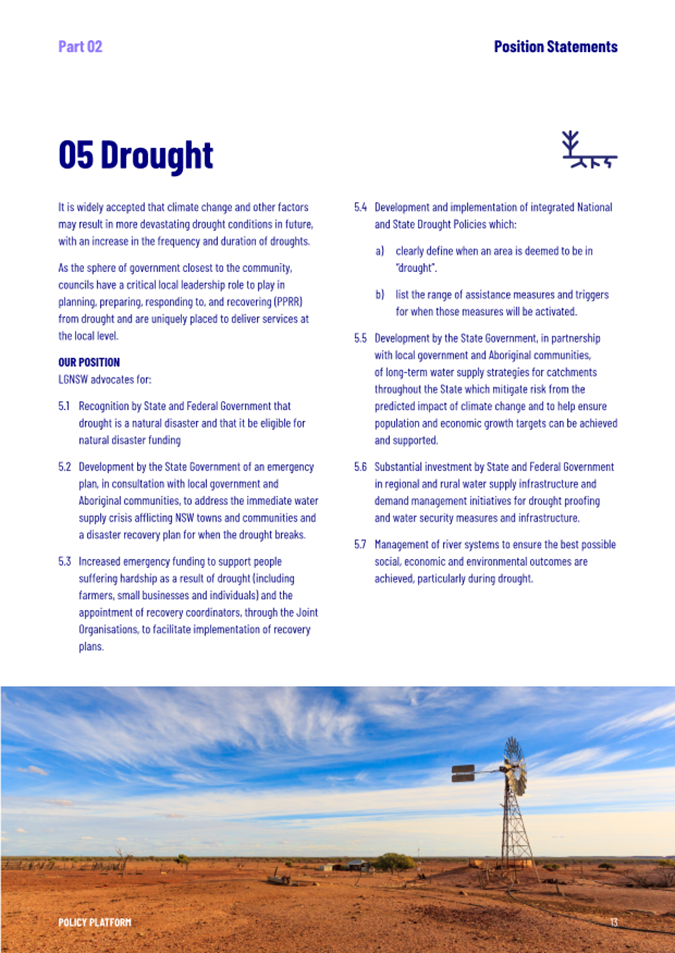











|
Council 17 September 2025
|
Item 11.3
|
11.3. Actions from resolutions of Council - Progress Report
This report provides a progress update on Council officer
actions following previous Council Resolutions.
Chief Executive Officer
Officer’s
Recommendation
That:
1. Council
be provided quarterly update reports to monitor progress on implementation of
Council resolutions
2. Council
notes the progress update on implementation of Council resolutions contained
within this report
3. Council
endorse the completed resolutions contained within this report
Executive Summary
It is important that Council is transparent in its progress
on implementing the resolutions of Council. This report provides a formal
mechanism of accountability back to Council and provides the information openly
to the community via Council’s website.
Background
Following each Council meeting Council Resolutions are
tasked to an officer in Council’s electronic Report System - InfoCouncil.
Progress of actions undertaken in relation to respective resolutions is
monitored internally by senior staff.
At the Council meeting of 18 May 2022, it was resolved:
1. That
Council be provided quarterly update reports to monitor progress on
implementation of Council resolutions
2. Council
notes the progress update on implementation of Council resolutions contained
within this report
At the Council meeting of 22 May 2024, it was resolved
1. That
Council be provided quarterly update reports to monitor progress on
implementation of Council resolutions
2. Council
notes the progress update on implementation of Council resolutions contained
within this report
3. That
future action progress reports include any resolutions that have been actioned
since the prior report to allow Council to endorse closure of those actions
Below is a link to outstanding actions from previous Council
resolutions since 14 May 2025.
Open actions from resolutions of
council for the period 14 May 2025 to 5 September 2025
Below is a link to completed actions since 5 September 2025.
Completed actions from resolutions
of Council as at 5 September 2025
Options
There are no options associated with this report.
Community
and Stakeholder Engagement
There are no community and stakeholder engagement
requirements associated with this report.
Engagement undertaken
There has been no engagement undertaken associated with this
report.
Engagement planned
There is no engagement planned associated with this report.
Financial
and Resource Considerations
There are no direct financial or resource considerations
associated with this report. If Council resolved to do anything other than note
the update there may be financial impacts to be considered.
Legal
/Policy
There are no legal/policy impacts associated with this
report.
Impacts
on Strategic/Operational/Asset Management Plan/Risk
Strategic
Alignment
E.1 of Council’s current Community Strategic Plan 2024
states: Lead, govern and regulate in an ethical, equitable, transparent and
accountable way.
Environment
and Climate Change
There are no environment or climate change impacts
associated with this report.
Economic
There are no economic benefits/impacts associated with this
report.
Risk
There are no risks associated with this report.
Social
/ Cultural
There are no social/cultural
impacts associated with this report.
Attachments
Nil
|
Council
|
17 September 2025
|
Notices of
Motion
17 September 2025
14.1 Lions
Beach Reserve at Pambula....................................................................... 236
|
Council 17 September 2025
|
Item 14.1
|
14.1. Cr
Mitchell Nadin - Lions Beach Reserve at Pambula
Notice of Motion
Can staff provide a report to council on costs to upgrade
the power at Lion’s Park Pambula Beach to allow for food van connection?
Background
Recently council ran a tender process for food van locations
across the shire. One of the sites was Lion’s Park at Pambula Beach,
which during the EOI was billed as a powered site but was later changed to
unpowered because it was established there wasn’t enough power to run a
food van and the sewer pump station.
This meant the operator had to purchase a diesel generator,
which is costing about $1000 per month in fuel and is also loud and pollutes
the air where people are consuming food/drink or enjoying the amenity of the
park.
It makes sense that if the cost is reasonable to upgrade the
power and potentially recover those costs through the lease or some other way.
Staff response
Council entered into a license with a food van operator for
Lions Beach Reserve at Pambula as a prime powered site from 23/12/2024 to
31/3/2025. At the time of signing this agreement, the site was a powered site
however there were plans to upgrade the sewer line which would result in the
site no longer being a powered site. The vendor was aware of this. As plans
were developed for the upgrade works to commence, the vendor was kept informed
and the works planned to commence at the conclusion of vendor’s licence.
The vendor was advised that if they would like to continue
with a new license, access to power would no longer be available and they would
need to supply their own power, such as a generator, if they needed it. The
vendor then entered into an additional 3 month license from 1/4/2025 to
30/6/2025 as an unpowered site.
When the vendor applied as part of the recent EOI process
they would have been aware the site was not powered due to previous
communication.
Staff have considered whether there are any other options to
enable the site to power food van operations, however due to the nature of the
permanent community infrastructure that needs power, including the sewer pump
for the toilets and BBQ timers, the only option would be to upgrade the power
further. There is no public infrastructure need for this upgrade, which
is estimated to cost approximately $10,000 to $15,000 (note: this is a rough
estimate only and may not be correct). As such, there is no existing budget
available to fund these works.
Cr Mitchell Nadin
Attachments
Nil
|
Council
|
17 September 2025
|
Questions
without Notice
17 September 2025
16.1 Cr
Nadin - Lots in our Shire................................................................................ 238
16.2 Cr
Porter - Robertson Street, Bemboka upgrade.............................................. 240
16.3 Cr
Porter – Are shark fishing signs posted at Tathra Wharf since the upgrade? 244
|
Council 17 September 2025
|
Item 16.1
|
16.1. Cr Nadin - Lots in our Shire
At the 23 June 2025 ordinary council meeting Cr Nadin asked
how many lots are there in our shire? How many lots are currently built on? How
many vacant lots have a minimum lot size small enough to get building approval?
Cr Nadin advised for context there are lots that exist that
cannot get a Development Application approved, as in they have no building
entitlement.
Director Community, Environment and Planning, Mrs Emily
Harrison took the question on notice.
Director Community Environment and Planning
Staff
response
How many lots are there in our Shire?
There are 27,685 lots in the Bega Valley Local Government
Area, noting not all lots were created for the purpose of a dwelling.
How many lots are currently built on?
Of those, it is estimated that 18,300 allotments are
occupied excluding allotments in National Park, forestry lands, commercial,
industrial, special use zones, environmental conservation, waterways and
recreation area).
How many vacant lots have a minimum lot size small enough
to get building approval?
It is important to understand that dwelling entitlements are
not necessarily linked to lot sizes. For example:
· All urban or
village lots with reticulated sewer or where suitable Onsite Sewage Management
solutions can be demonstrated can be built on.
· Rural dwelling
entitlements in the RU1, RU2 and C3 zones vary but generally depend on how
and/or why the lot was created (for example, was the allotment created for the
purpose of a dwelling in a subdivision under an Environmental Planning
Instrument – SEPP, LEP etc).
· Rural Residential
dwelling entitlements in zones RU4, C4 and R5 vary but generally lots tend to
have dwelling entitlements because they were created for the purposes of a
dwelling.
How many lots have no building entitlement?
The number and location of
rural and rural residential lots with no building entitlement is not known and
cannot be derived without individually investigating every single parcel of
land.
Landowners seeking
information on dwelling entitlement status for their property are encouraged to
write to Council for more information (development enquiry fees may apply).
What we do know
· In 2015 there were
approximately 1,067 existing vacant concessional lots.
· In 2019
approximately 16% of existing rural residential zoned lots were vacant.
· In 2019 there was
capacity for up to 590 additional lots to be created in rural residential
zones.
· In 2020
Council’s Rural Residential Strategy created potential for between
700-1,350 new rural residential lots.
· 2025 estimates of
existing vacant lots are in the order of 900 vacant urban zoned residential
lots, 600 vacant rural residential zoned lots and over 5,000 vacant rural zoned
lots. These figures are estimates and have not been subject to ground truthing.
Concern has been raised that dwelling entitlements were
‘lost’ with the introduction of Bega Valley Local Environmental
Plan 2013. With the exception of specific site by site directions for land from
adopted Council strategies such as Structure Plans, staff are unaware of any
dwelling entitlements that have been lost through the implementation of LEP
2013.
If any landowner believes that their dwelling entitlement
was lost through the implementation of LEP 2013, they should contact
Council’s Strategic Planning Section with the property details and this
will be thoroughly investigated on a case by case basis. It should be noted
that of the handful of cases known to staff where land owners have claimed they
lost a dwelling entitlement through the implementation of LEP 2013, upon
investigation none of these claims have been substantiated.
Attachments
Nil
|
Council 17 September 2025
|
Item 16.2
|
16.2. Cr Porter - Robertson Street, Bemboka upgrade
At the ordinary council meeting of
20 August 2025 Cr Porter asked:
· What cost
estimates, if any, have been developed to upgrade and seal Robertson Street in
Bemboka, particularly the section between Loftus Street (Snowy Mountains
Highway) and Garvan Street?
· What was the scope
of any such estimated upgrades?
· What mechanisms
would be available to facilitate a co-contribution arrangement between property
owners and the Council for the upgrade of the road?
Chief Executive Officer, Mr Anthony McMahon took the
question on notice.
Director Infrastructure
Staff
response
1. What
cost estimates, if any, have been developed to upgrade and seal Robertson
Street in Bemboka, particularly the section between Loftus Street (Snowy
Mountains Highway) and Garvan Street?
Firstly, it must be recognised
that this section of road reserve in Bemboka is not and never has been a formed
road. Until relatively recently it was a Crown Road Reserve that was then
transferred to Council without upgrading or provision of suitable property
access. The pictures below show it as green field site without any formed
access to the properties with just wheel ruts delineating it.
Any proposal therefore is not for
a road upgrade but a complete road construction and provision of property
access points. As can be clearly seen the gradient of any road will cause
significant design challenges to mitigate the drainage and runoff issues at the
bottom of the hill.


Following a QoN from Cr Bain in
2019, Council’s Roads Coordinator carried out a site visit and developed
a preliminary high level cost estimate based on then current unit rates for
materials and construction of a ‘typical’ rural road including
drainage structures.
This was estimated at
approximately $220,000 in 2020 but was without the benefit of any survey,
geotechnical investigation, pavement or drainage design to fully inform the
estimate. Also specifically excluded was any provision for exit/entry
onto the Snowy Mountains Highway, identification and relocation of any services
in the corridor and easement requirements for the power lines on the western
side of Robertson Street.
2. What was the scope of any such
estimated upgrades?
The scope was for the design and construction
of a basic, minimum width spray sealed pavement and associated drainage
structures. Approx dimensions were assumed as 240m x 7m with a 250mm pavement
depth for estimation purposes only. An allowance was included for detailed
survey and design which would confirm all dimensions.
3. What mechanisms would be available to facilitate a
co-contribution arrangement between property owners and the Council for the
upgrade of the road?
In
this type of circumstance property owners may utilise several mechanisms to
contribute to road upgrades. These mechanisms are broadly categorised as
follows:
· Voluntary
Contributions and Agreements
· Special Rate or
Charge Schemes
· Development
Contributions (Sections 7.11 and 7.12)
1.
Voluntary Contributions and Agreements
One of the most
direct mechanisms involves voluntary financial or in-kind contributions by
property owners. When residents seek improvements to a local road—such as
sealing, widening, or drainage enhancements—they may organise collectively
and submit a formal request to Bega Valley Shire Council. Council may enter a
cost-sharing arrangement whereby property owners contribute a portion of the
upgrade costs, with council providing the balance.
The typical
process includes the following steps:
· Lodgement of an
initial request with council by affected property owners or an association
representing them.
· Council undertakes
a comprehensive assessment of the proposal, estimates costs, and negotiates the
scope of work and financial contributions.
· A formal agreement
is executed, stipulating the commitments of all parties, timelines, and
technical specifications.
· Upon completion of
agreements, works are scheduled and executed by council or approved
contractors.
This approach
relies on goodwill, transparency, and open communication between council and
residents.
2.
Special Rate or Charge Schemes
Under the Local
Government Act 1993 (NSW), councils possess the authority to levy special rates
or charges on properties that benefit from specific works or services, such as
road upgrades. In Bega Valley Shire, this mechanism is occasionally employed for
major works where a clear, direct benefit to a defined group of properties can
be established.
The process for
implementing a special rate or charge scheme typically involves:
· Identification of
properties that will derive benefit from the proposed road upgrade.
· Preparation of a
detailed proposal, including costings, scope of works, and method of
apportioning charges.
· Consultation with
affected property owners to explain the proposal and seek formal feedback.
· Formal adoption of
the scheme by council, subject to statutory public notification and the
opportunity for submissions.
· Execution of
works, with costs recovered via the special rate or charge included in council
rates notices.
This mechanism
ensures that those who benefit directly from improved infrastructure share the
associated costs, while providing a transparent and accountable process.
3.
Development Contributions (Sections 7.11 and 7.12)
New residential
and commercial developments frequently generate additional demand for local
infrastructure, including roads. To address such impacts, the Environmental
Planning and Assessment Act 1979 provides for the collection of development
contributions (previously Section 94 contributions, now Sections 7.11 and
7.12).
When property
owners or developers submit a development application that, if approved, will
necessitate upgraded roads, council may require payment of a development
contribution as a condition of consent. These funds are allocated to specific
works identified in council’s development contributions plan, which is
publicly accessible and regularly reviewed.
Development
contributions are generally collected upon issuance of the construction
certificate or prior to commencement of works. This is not usually
retrospective so would not be applicable to previously constructed and approved
dwellings.
Attachments
Nil
|
Council 17 September 2025
|
Item 16.3
|
16.3. Cr Porter – Are shark fishing signs posted at Tathra Wharf
since the upgrade?
At the ordinary meeting of 20
August 2025 Cr Porter asked could Council confirm whether the ordinance sign
regarding shark fishing and the using of trace lines has been returned to
Tathra Wharf since the upgrade has been completed?
Chief Executive Officer, Anthony
McMahon took the questions on notice.
Chief Executive Officer
Staff
response
The no shark fishing sign at the Tathra Wharf is currently
located adjacent to the pedestrian access ramp to the public amenities. See
photo below. Prior to the wharf upgrade project, the sign was located in the
middle of the deck on the main ramp, outside the cafe doors.

Attachments
Nil